
Enlarge
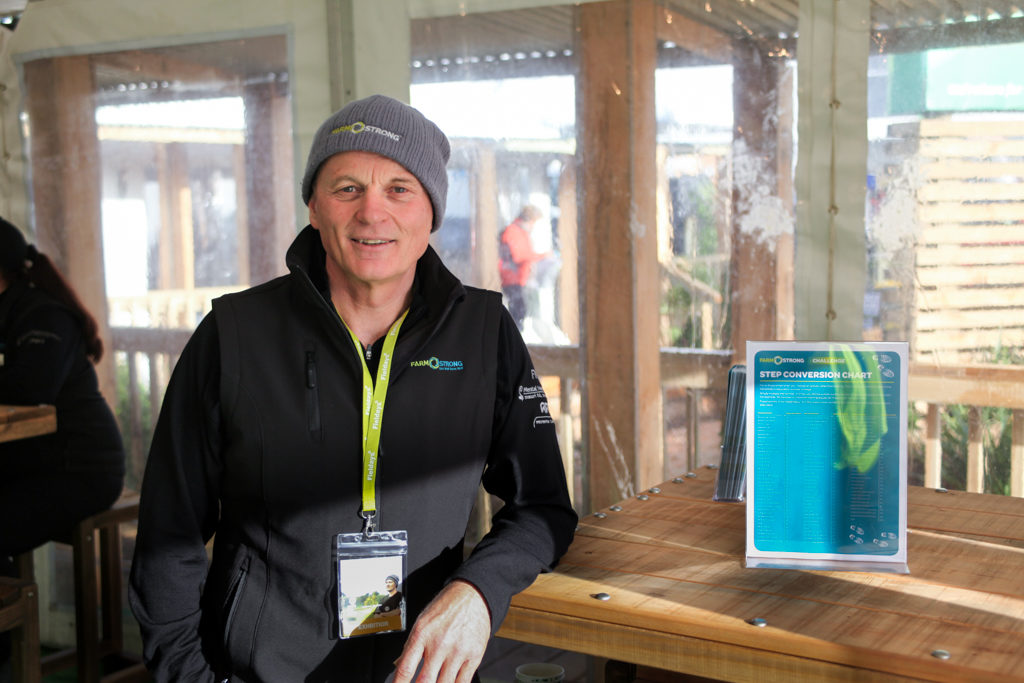
After working in the mental health sector for eight years, Gerard Vaughan came to a realisation: he didn’t want to fix people with depression and anxiety, he wanted to stop them feeling it in the first place.
And as the founder of Farmstrong, that’s what he’s been doing.
Vaughan had previously spent a year speaking with farmers to unearth what they were struggling with, and how he could offer support.
“There was quite a lot of stress and pressure in the rural area, people running complex farm businesses,” said Vaughan.
“They’re really focused on their land, their stock, and their machinery to run a successful business. But actually, if they’re not looking after themselves, their business is at risk of falling over.”
There is a whole science of how to look after yourself as a human being, said Vaughan, and farmers were often stressed about things they could not control, like the weather or stock markets.
The programme was intentionally created to prevent, rather than fix, mental illness.
“Some of the more common mental health problems – anxiety, depression, substance abuse – some of those behaviours are predeveloped habits. Keeping ourselves well, we can actually prevent that in the first place.”
Technology has changed the social dynamics of farming as well. Years ago the neighbourhood would come together to do the hay baling.
“Now there’s contracted suppliers who come in and do that.”
Farmers may not know who their neighbours are any more, and for beef farmers in particular, they can go months without seeing anybody.
“If you’re struggling with stuff, there’s a lot of time you spend by yourself on your land with things just going round and round your head,” said Vaughan.
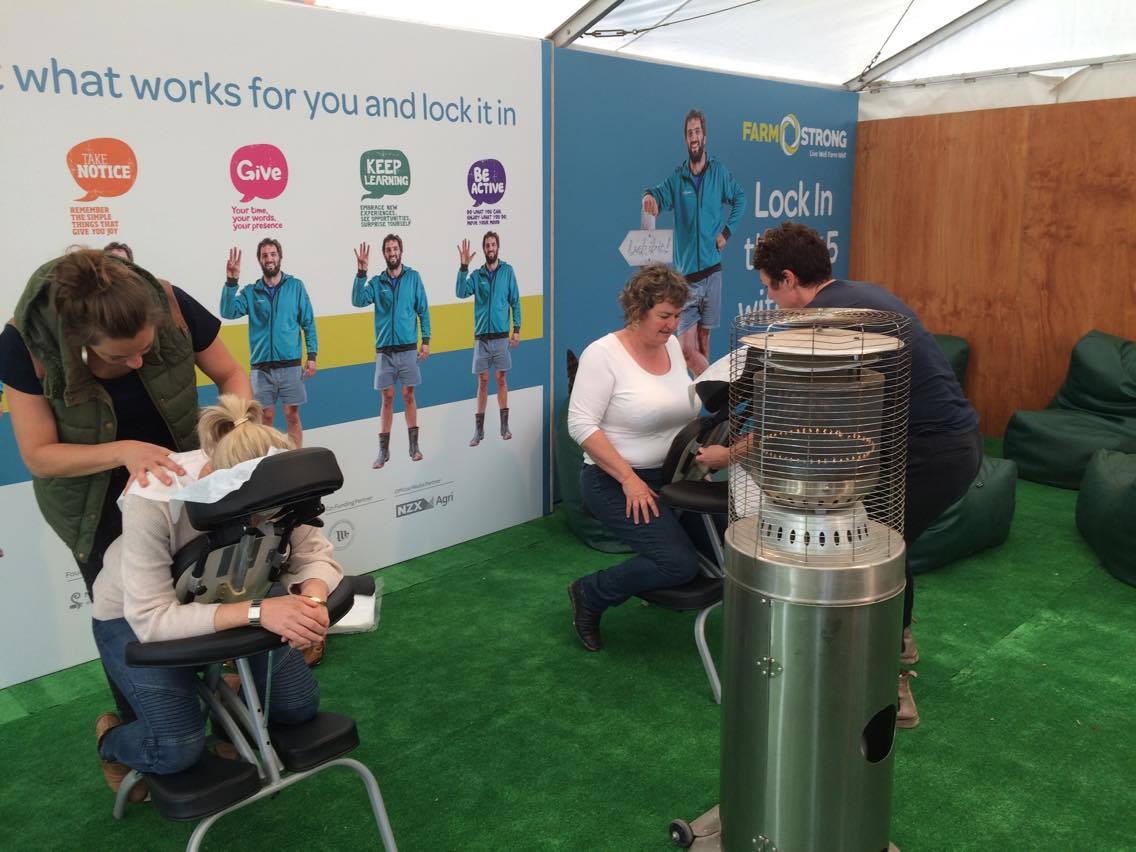
Farmstrong had a tent at Fieldays 2017, in an effort to share their message and help improve farmers wellbeing.
Dairy farmer Blue Jones agrees that people don’t connect like they used to, and understands why Farmstrong is helping solve this.
“Everyone’s too busy and people don’t seem to notice things going on. Every farmer’s just doing their own thing,” said Jones.
Farmstrong is trying to change this, by creating events such as comedy shows that will bring a community together.
They have a few other ideas up their sleeve as well. Vaughan wants to create a farmer Air B’n’B situation, where farmers can trade houses for a week and have a break.
Taking time out was something that resonated with dairy farmer Jenette Craw.
“It feels like they’ve got no way out when they’re financially strapped, and I think that’s probably part of the problem,” said Craw.
“If people are financially restricted they have to keep going and there’s no way to actually get out of it, you revert inwards… thinking committing suicide, you wonder, its just us hypothesising, but if that’s sort of part of the problem.”
Vaughan understands this issue, and Farmstrong are working on initiative to solve this.
He wants farmers to work together to allow breaks, even if it just feeding their neighbours’ dog so they can go away for the weekend and rest their body and mind.
Enlarge
In fact, the most common issue Farmstrong found was that 50% of farmers were struggling to get time off the farm.
“The whole science of the way the body needs rest is similar to an athlete, even the All Blacks don’t train every day,” said Vaughan.
“What we’re really promoting is if you want to be sustainable for the long term and the business, you want to be continuing to make good decisions, you need to understand the science behind wellbeing. If you’re just working every day hard out your body’s not going to be performing at its best.”
Farmstrong studies also found that males were not looking for information about their health, they wanted a programme that helped make them a better farmer.
“We quite intentionally frame the programme as a good for business programme rather than a programme about mental health programme, even though mental health is a big part of it,” said Vaughan.
“Farmers in the past have always sort of been ‘she’ll be right’, and if they’ve got a mental problem they won’t talk about it with anyone and put it in the back of their heads and forge on,” said Jones.
The messages that Farmstrong are sending across about talking and taking breaks are something that they both Craw and Jones agreed needs to be worked on, for themselves, as well as others they know in the community.
“I probably am guilty of it, I get to a point sometimes in a stressful situation I’ll just crack and unload. Now we’ve sort of learnt to talk about it a bit more, and prepare ourselves for that sort of situation,” said Jones.
Vaughan said he found a couple of people coming up to the tent at Fieldays with concerns for their friends, and said noticing the small things is what makes a difference.
“They used to come to events all the time, they’ve stopped coming,” is what one concerned friend told Vaughan.
Enlarge
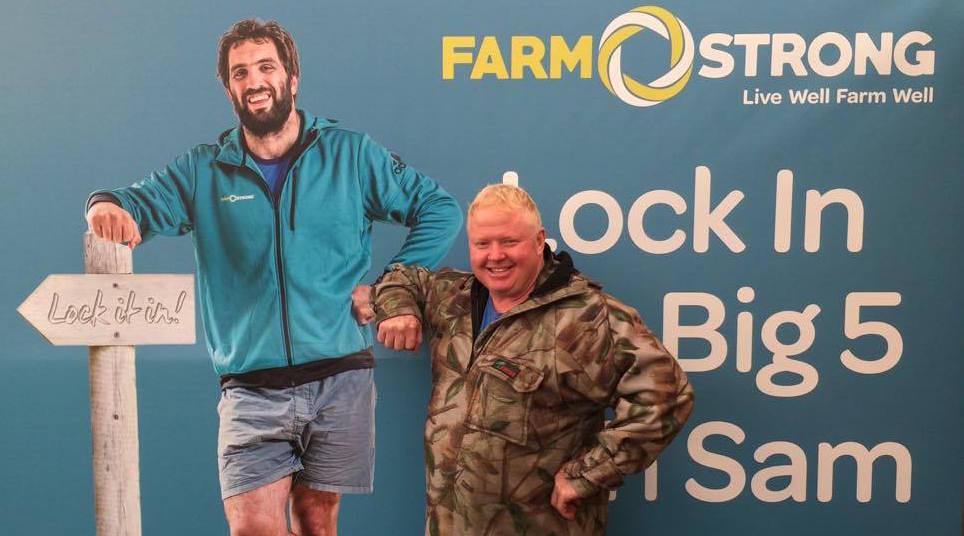
Farmstrong is promoting to the population the importance of working in a community to notice these small details.
The end goal for Farmstrong is to get more people involved, as the more people involved, the more people they can help.
Their five tips for wellbeing are:
Exercise – It promotes serotonin and endorphins, as well as a physically healthy body.
Community-Being well connected with community prevents isolation, creates a feeling of belonging.
Regularly giving – Freely giving without expecting anything in return gives you endorphins.
Education – Life long commitment to learning stimulates synapses to connect.
Live in the present- Love the little things, and appreciate the good things in life.


