

There a few things in life that are important, family is one of them. For some, the meaning of family does not have to mean biological. In other circumstances, it means ensuring that a child is a part of a loving, safe, forever home.
This is what adoption is.
November 9th is World Adoption Day, a day to celebrate the power and beauty of family brought together through adoption. The day raises awareness of different stories from all walks of life.
The legal act of adoption is when one party is unable to support their child, giving up their rights to be a parent.
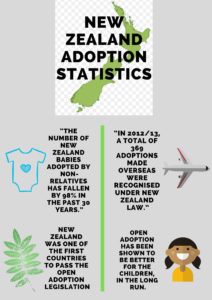
New Zealand was one of the first countries to pass the open adoption legislation.
The New Zealand Adoption Act (1995) is very outdated making it hard on loving parents in New Zealand to be able to adopt.
The process takes two or more years, but every case is unique.
New Zealand Adoption Statistics. Created by: Hollie Blanchard & Meghan Batey
New Zealand has been brought to the attention of this topic from broadcaster, Toni Street who has had first-hand experience of how outdated the adoption process in New Zealand is.
It is a long, slow, complicated process that doesn’t need to be, to legally adopt her biological son via surrogacy.
“The number of New Zealand babies adopted by non-relatives has fallen by 98% in the past 30 years.”
Domestic adoption has over the years been a known practice in New Zealand, though very controversial with social pressures often led to unmarried women giving up their children for adoption.
Oranga Tamariki (ministry of children) grants guardianship under the Adoption Act (1995).
Guardianship gives custody to the party to have full rights, duties and responsibilities of the child. This includes having the role of day-to-day care for the child and contributing to the child’s development.
In Māori society, children were often brought up by relatives who were not their birth parents. Whāngai usually involves a child being raised by its whānau or extended family.
Whāngai is informal. Oranga Tamariki does not need to be involved in the process.
“In 2012/13, a total of 369 adoptions made overseas were recognised under New Zealand law.”
For International adoption, the child is being adopted out of an orphanage or foster home. Children in an orphanage often do not receive personal care or attention needed simply due to the lack of resources provided. A family, giving love, personal care and stability, will help the child to thrive.
Inter-country Adoption New Zealand (ICANZ) states that “New Zealanders can no longer adopt in Russia as the New Zealand Ministry of Social Development has failed to negotiate a satisfactory bilateral agreement with the Russian authorities.”
In this article, we share with you two stories that focus on experiences of guardianship and inter-country adoption from the 90s and early 2000s and how this process is very similar to today because the laws need to change.
Adoption redeems that brokenness it gives healing, hope and joy and celebration.
Even though all these stories begin in tragedy somehow, for one day we are going to celebrate because if it didn’t happen we would not have certain people around us.
A surname shows your identity. By Hollie Blanchard
At the age of three years old Bailey became an orphan due to the sudden death of both his parents in a motorcycle accident.
The immediate steps after their funeral in 1993 determined his path for the rest of his life.
His mother was Pākehā, his father was Māori.
Bailey’s maternal grandparents, Ken and Joan, were in their mid 50s and just had become empty nesters at the time.
There was an expectation that Bailey’s mother’s siblings would take care of him because of the age of Ken and Joan.
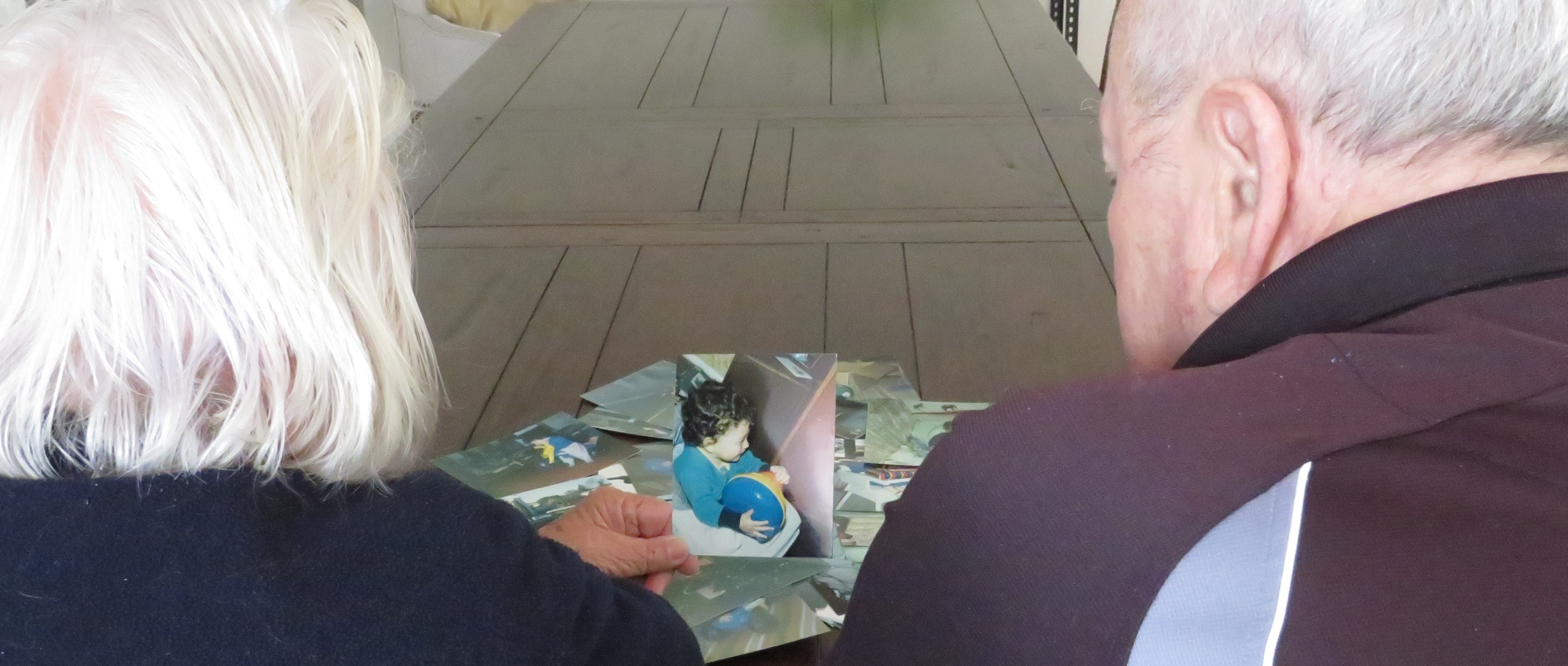
Saying their future wasn’t fully mapped out either at that stage, Ken and Joan were granted guardianship of Bailey because his mother’s siblings were still establishing their lives and careers.
Ken and Joan had the freedom to choose whether they wanted adoption or guardianship.
The formalisation of guardianship requires attending the family court, which allowed Ken and Joan vital decision making and responsibility of deciding where he went to school and his everyday needs.
“Looking back there was a little boy that needed to know where he belonged.”
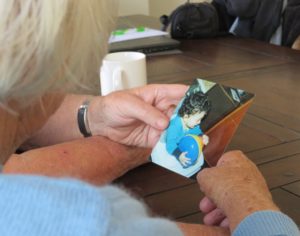
Ken and Joan remember the early days of guardianship.
Photo: Hollie Blanchard
Ken and Joan were offered by the court whether they wanted to change Bailey’s surname.
If they had adopted him, their names would replace Bailey’s parents’ names and his father’s surname would have been dropped.
Over the years they gently reminded him that the offer was still there. It was important to Joan and Ken and the wider family that Bailey knew family and he had a sense of belonging.
“It became our decision rather than our community decision,” said Ken.
This New Zealand family were always close but the situation made them closer. It takes a village to raise a child.
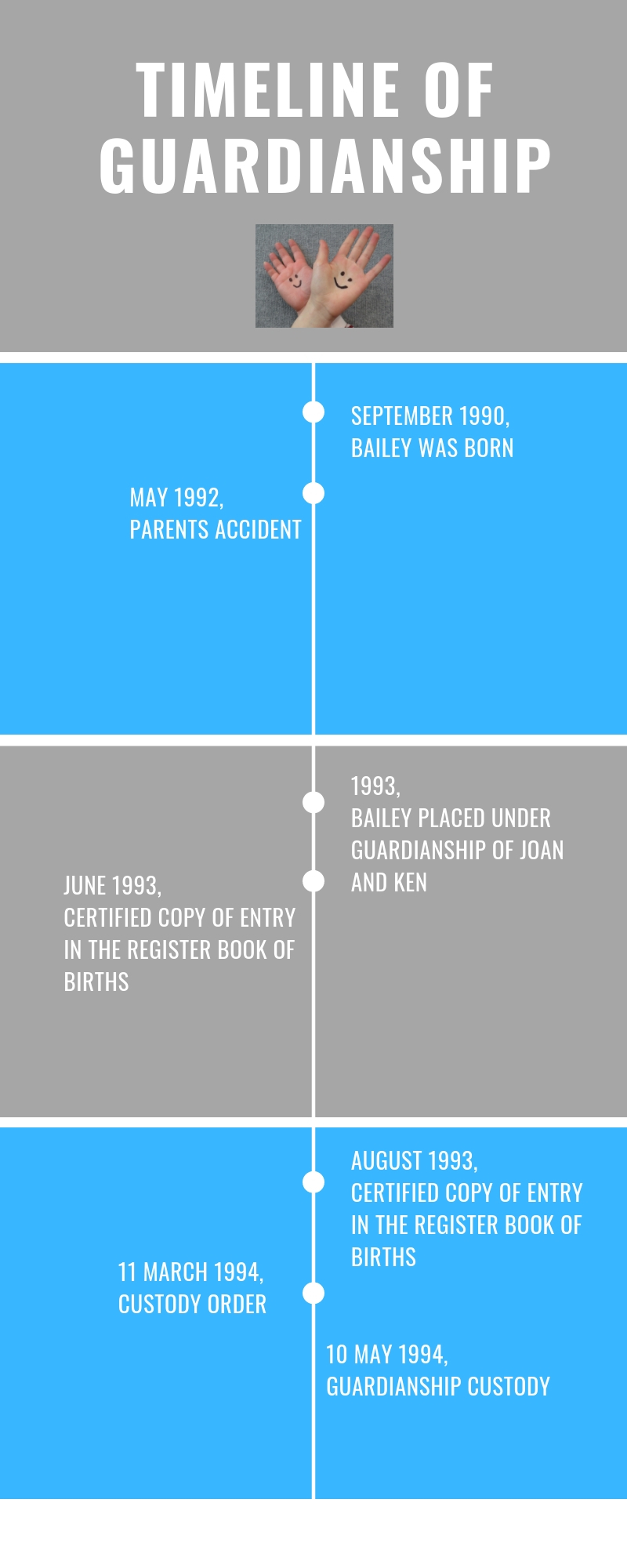
The guardianship was not a complicated process to go through, other things such as ACC (Accident Compensation Corporation) payments eventually fell into place.
Bailey received funding from ACC which went up to the age of 18-years-old because he was considered an adult.
“We were at the stage a lot of grandparents are these days who take over care of grandchildren,” said Ken.
Reminding Bailey of his Maori culture, Joan ensured he was taken to tangi and spoke to people within the community because they were connected to his family.
Inheriting aspects of his grandparents, Bailey seemed to naturally embrace both sides of his culture.
The Adoption process in New Zealand is very slow but the Labour Party has announced they will “review and reform the adoption system in New Zealand.”
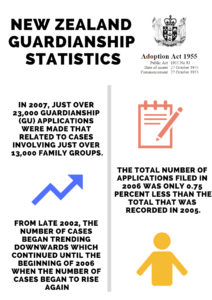
New Zealand Guardianship statistics.
Created by: Hollie Blanchard & Meghan Batey
“The Adoption Act is now over six decades old, and is badly in need of an overhaul,” the party’s policy stated.
You have to be at least 25-years-old to adopt which is why everyone assumed Bailey would be taken care of by his mother’s siblings.
Be grateful for the life you have, it could be so different By Meghan Batey
* names have been changed for the purpose of the story
Home is described as a sense of belonging filled with love.
For Natalia* home for her first six years of life was described as long fences surrounding her in the middle of nowhere, where she had to share a living space with 120 children.
Natalia, now 22-years-old, was born in Prokopyevsk, Siberia and placed in an orphanage at the age of six-months-old.
Natalia remembers her beginnings.
She was four when she first met Jean* and John* when they made a trip over to Russia to adopt her and her younger brother.
“I would always remember that we would always play – but it’s not really a memory because you are kind of just stuck there,” said Natalia.
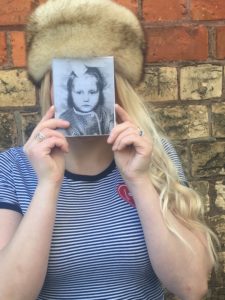
Natalia’s Russian identity shown through the only photo she has from her orphanage Photo: Meghan Batey
When she was two-years-old Natalia’s birth mother tried to take her back but, for an unknown reason, the orphanage wouldn’t allow it. Natalia thinks about it all the time. “She’s kind of like a stranger but she is not.”
Had she not been placed in the orphanage her life could have been so different. “You got to live with it. My mum put me in the orphanage for a reason and now I am in a better lifestyle.”
The main reason people choose to adopt a child is they cannot have any children of their own.
In New Zealand, it is very difficult for older parents to domestically adopt whilst turning towards Intercountry adoption. This is what Jean and John faced while applying for documentation. The process was long and expensive.
“It would have been 18 months or so from the time we started to actually get over there,” said Jean.
“We had to go and do courses at Child Youth and Families (CYFS) which I believe is now Oranga Tamariki. And had to go on and do the international adoption session of theirs. Then after that, we had to do the whole process through Intercountry Adoption New Zealand (ICANZ) We had to go through another set of applications processes but we had to be accredited by CYFS to before ICANZ.”
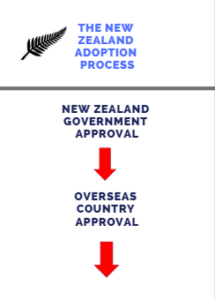
New Zealand Adoption Statistics.
Created by: Hollie Blanchard & Meghan Batey
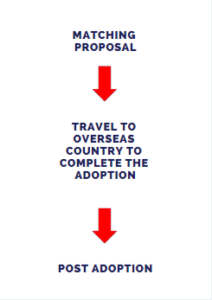
New Zealand Adoption Statistics. Created by: Hollie Blanchard & Meghan Batey
Two days before the adoption hearing in Russia, Jean and John were told there were complications with Natalia’s papers which meant they could go ahead with the adoption of her brother but were not able to adopt her and told they had to go find another girl.
They had no option but to fly home with their son and hope for the best.
“I got a teddy from mum and dad when I was in the orphanage, to tell me that they were coming back,” said Natalia.
In 2001, the news that Jean and John were hoping for came true. They got to adopt Natalia. Their family was finally complete.
“When I got to the airport I just remember this little boy running straight up to me and giving me a big hug and then showing me around saying this is my big sister,” said Natalia,
After arriving in New Zealand like most other adopted Russian children, Natalia’s family faced challenges with her adapting to a new environment. Natalia was malnourished, had an attachment disorder, and struggled in school.
“It was more when I got into school. I struggled a lot because I was learning a new alphabet,” said Natalia.
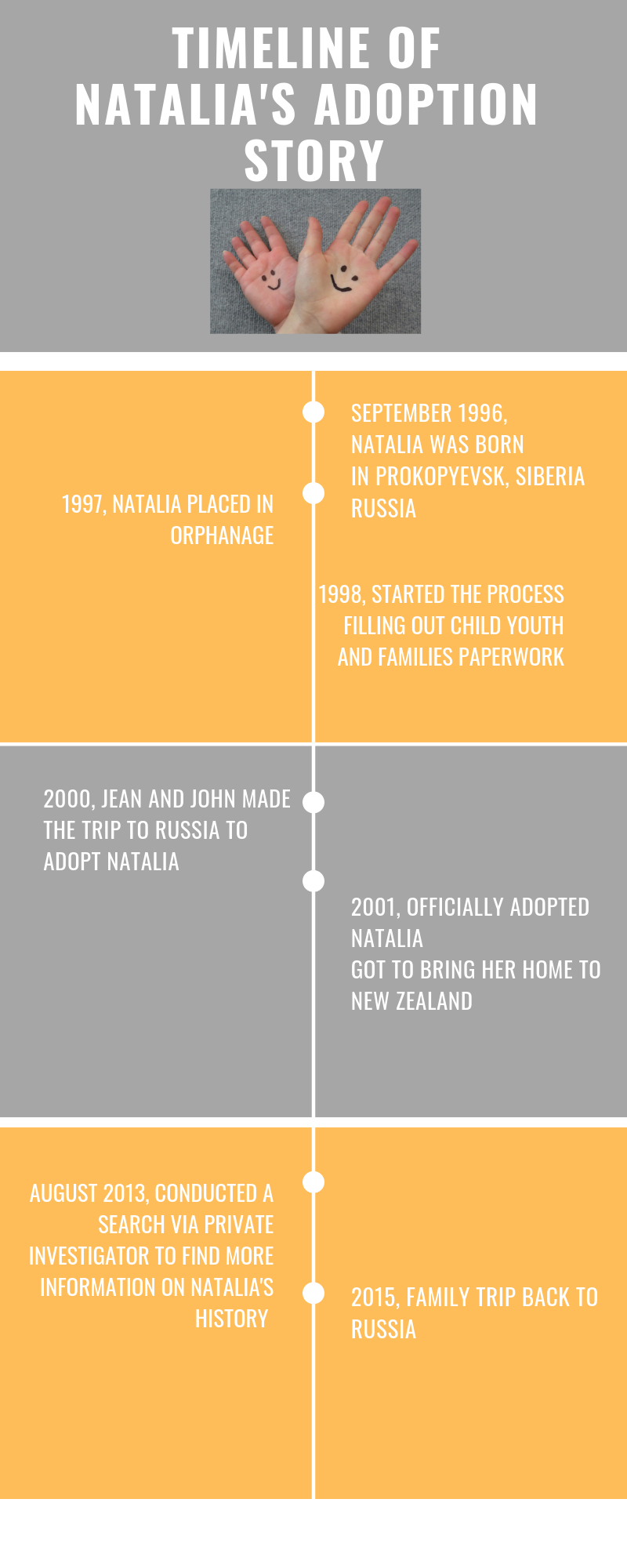
In 2015, Natalia was fortunate enough to return to Russia for a holiday with her family.
Being older and more mature, they would understand the significance of the trip back to her homeland.
“When I went inside I remembered exactly where I slept, where my room was, the long hallways. There are not as many people in there now.”
The trip to Russia was an overwhelming experience for the family. Leaving Russia gave the family a realistic scare of how important it is to travel with their real adoption documents instead of photocopies.
Natalia and her brother were stopped and were questioned about their Russian passports but they could not understand nor speak the language. The airport security thought Jean and John were kidnapping them.
Travelling back to Russia has made Natalia grateful of where she has come from but also the life that she has in New Zealand.
“Be grateful of who you are and what’s around you. I am going to have Russian in me but I am a true Kiwi.”


