
Rā Maumahara: Remembering Ngāti Wairere
Enlarge
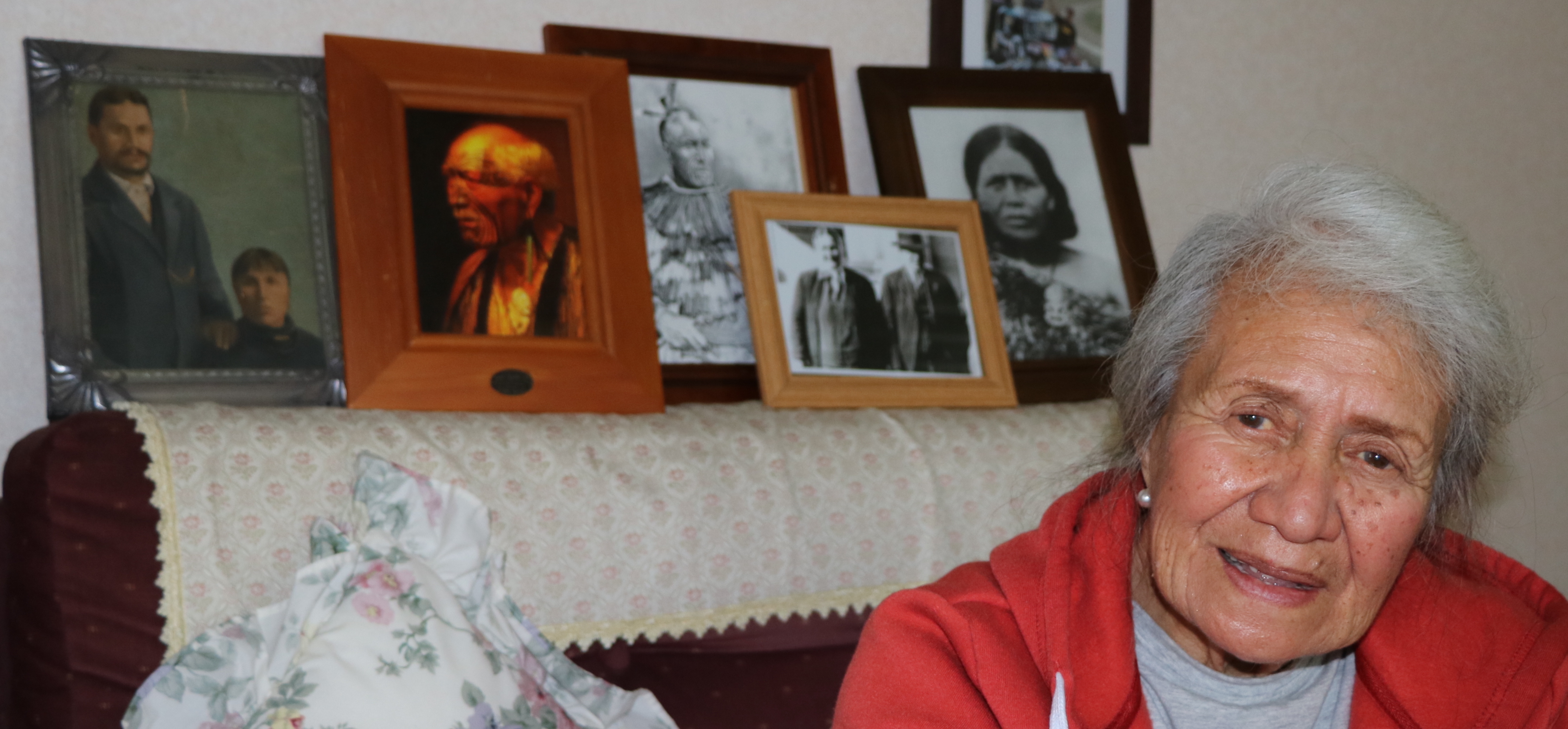
Ngāti Wairere kuia Hekeiterangi Broadhurst in Rāhui Pōkeka (Huntly) surrounded by photographs of her Tupuna. Photo: Horiana Henderson
Rā Maumahara (Commemoration Day for the New Zealand Wars) was a day of remembrance for Ngāti Wairere kuia Hekeiterangi Broadhurst who attended Hamilton’s ceremony at Steele Park on October 28. She was interviewed in Rāhui Pōkeka (Huntly) on October 31.
Broadhurst saw symbolism in Rā Maumahara’s rainy disposition.
In commemoration of the Waikato Wars of 1863-1864 red ribbons with the names of Kīngitanga Māori of the era were tied around the park’s oak trees.
Enlarge
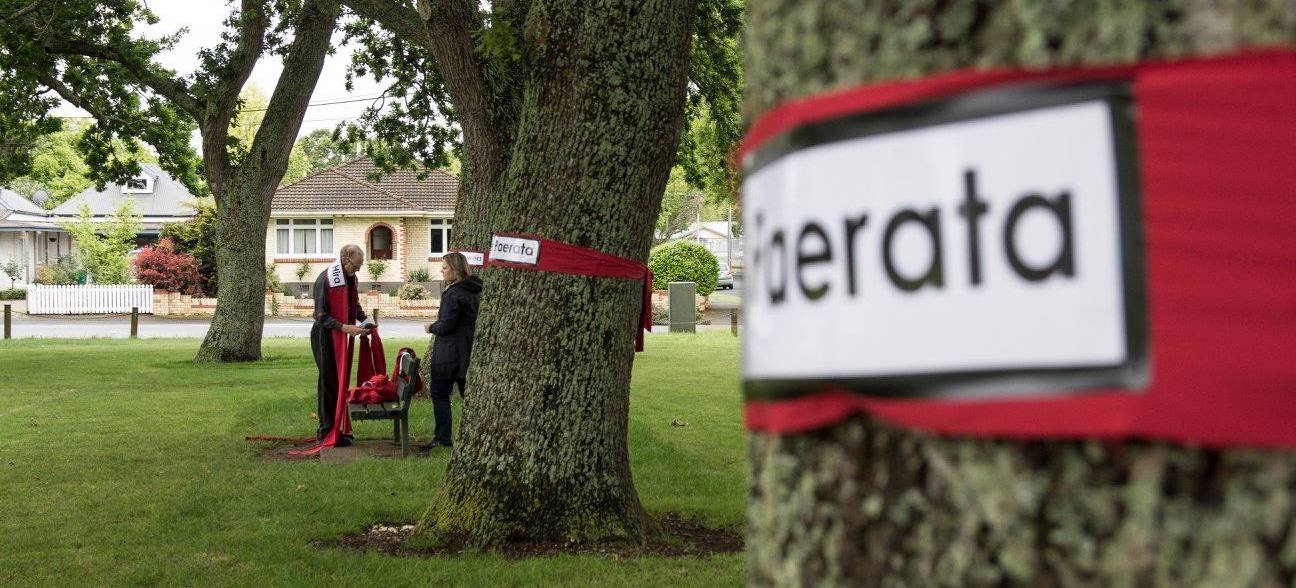
Bruce MacKay and a friend tie red ribbons honouring Kīngitanga fighters of the 1863-1864 Waikato Wars at Hamilton's Steele Park. Photo: Supplied
The park is named after Captain William Steele who commanded the gunboat ‘Rangiriri’, and the trees were each named after members of the 4th Waikato Militia who claimed Hamilton (Kirikiriroa) in 1864 for European settlement.
Enlarge
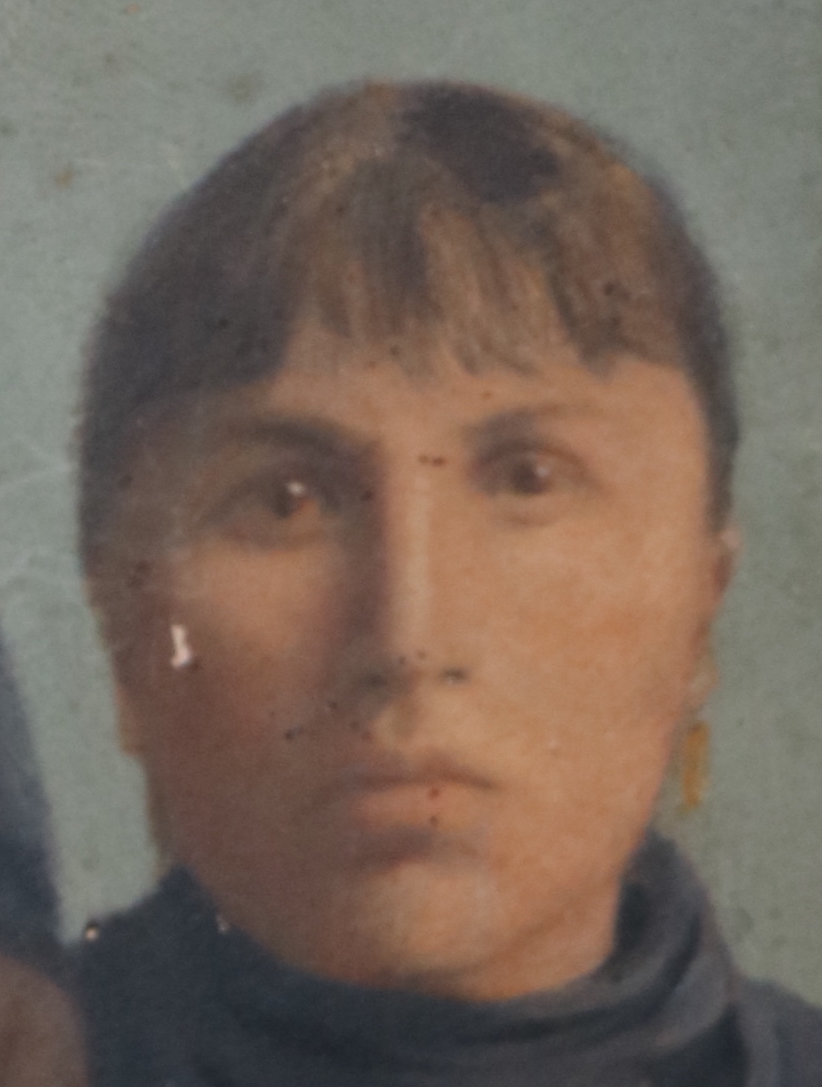
Kameta Te Puke, eye-witness to the attack on Rangiaowhia in 1864. Photo: Supplied
Hamilton’s only Rā Maumahara ceremony was organised by Bruce MacKay, and Ngāti Wairere as mana whenua played a significant role.
Broadhurst spoke at the service of her grandmother Kameta Te Puke (nee Te Tuhi) who was the last eye-witness of the attack on Rangiaowhia, near Te Awamutu, on 21 February 1864.
Kameta was a young girl at the time and her beloved great grandfather Patara Te Tuhi was a warrior, secretary, adviser, and second cousin to the second Māori king, Tāwhiao. Both men received her following the deaths of their people and the king wept.
Rangiaowhia is the rohe of Ngāti Apakura and was the agricultural base of Waikato and the Kīngitanga (king movement) and boasted “rich resources” and a “thriving agricultural trade”.
Kirikiriroa was similarly abundant. Today, Visit Hamilton highlights its location as “one of the richest agricultural and pastoral areas in the world,” and that agricultural and economic affluence existed during Ngāti Wairere’s early occupation.
Before European settlement in the region, Māori dominated trade to domestic, Australian and Californian markets. In Auckland, the colony’s capital, the settler population was dependent on produce from Waikato.
Enlarge
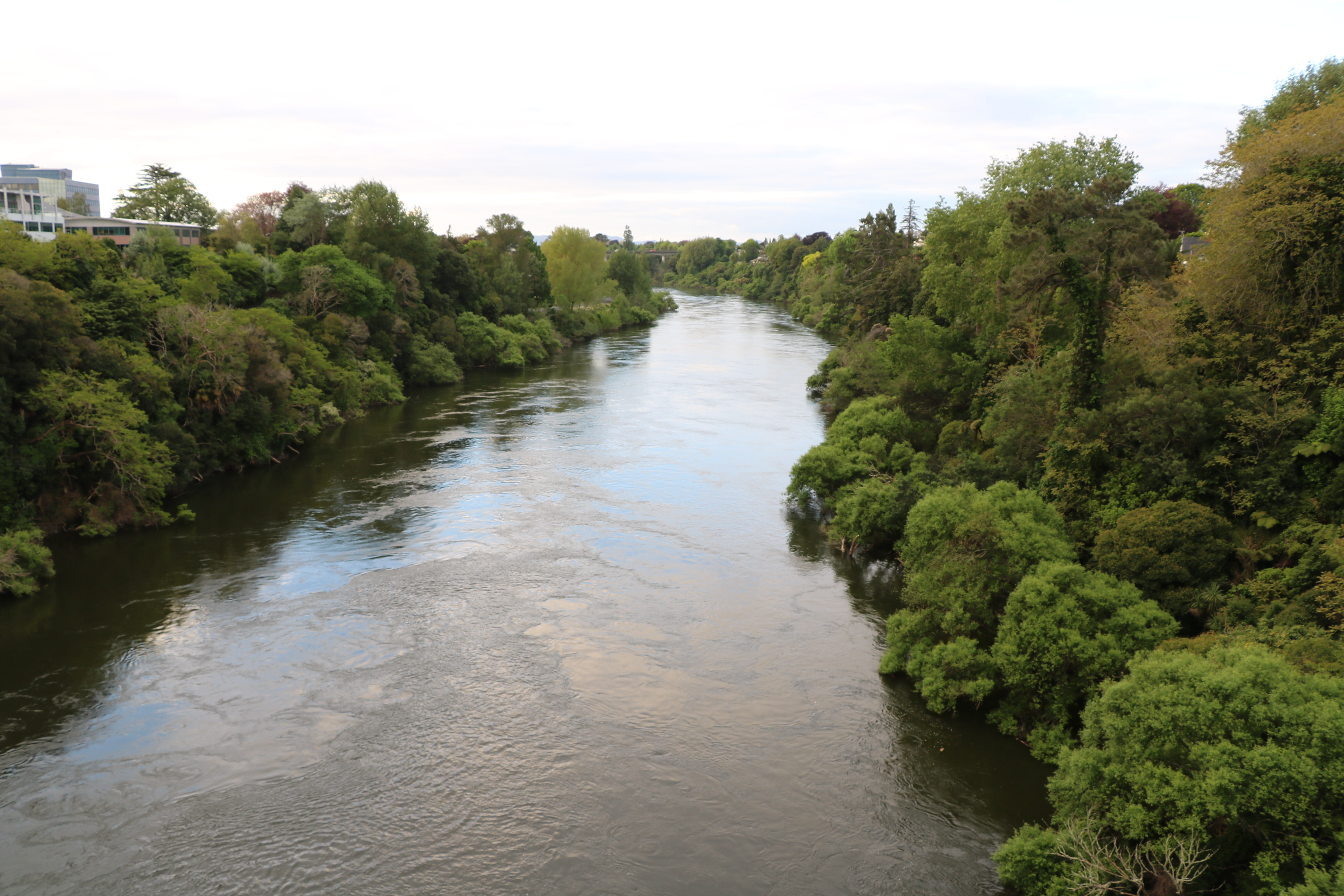
The Waikato river was the centre of life, agriculture and commerce in the 1800s. Photo: Horiana Henderson
Heritage New Zealand’s Waikato Wars Education resource, A journey through the Waikato War, states that 20 Māori flour mills operated in the region and it was known as the “granary to the province of Auckland…Pakeha farmer settlers and land hungry speculators from Auckland looked towards the rich land of the Waikato with envious eyes.”
Broadhurst spoke of Hamilton’s original occupants and of an envy that led to war.
Enlarge
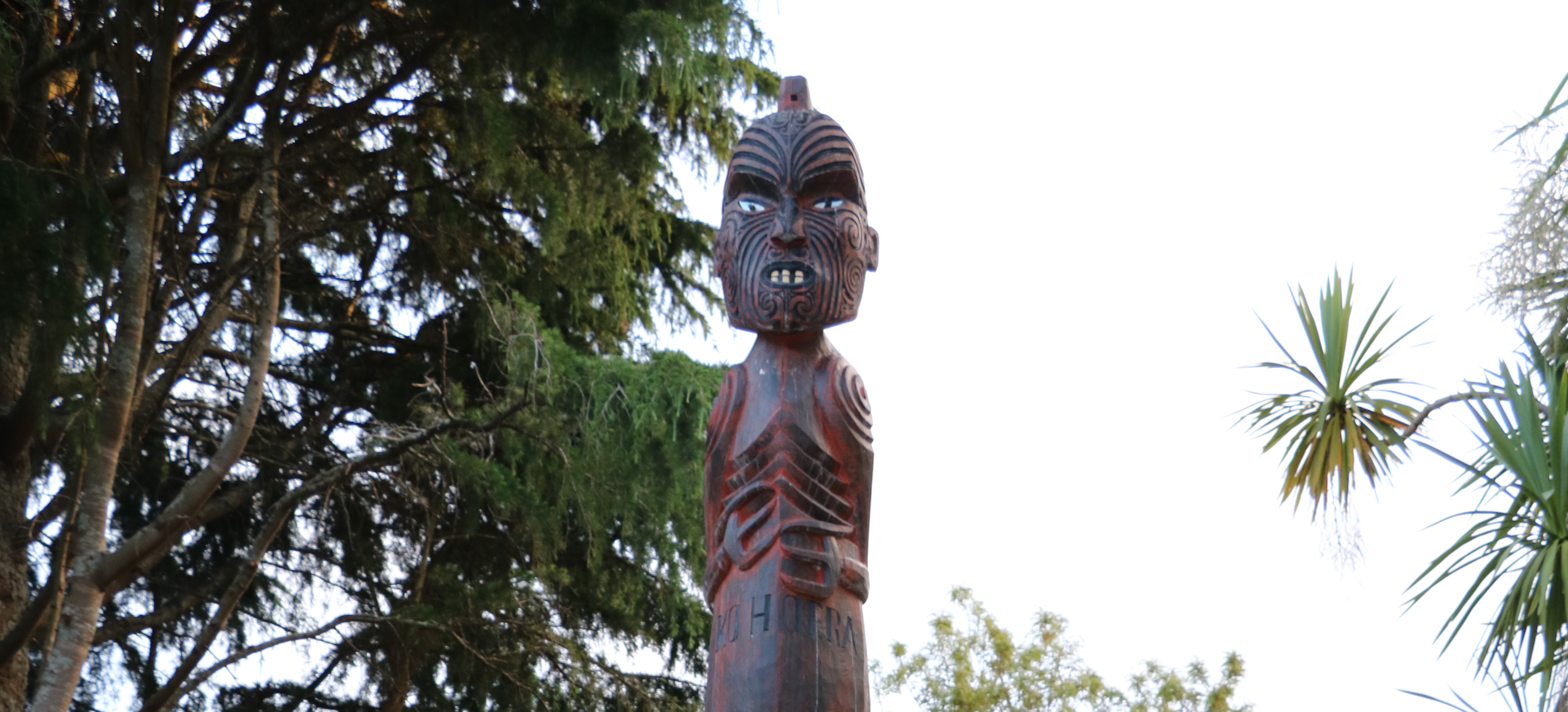
Pou (carved post) at Kirikiriroa Pā representing Ngāti Wairere chief Hoera Taonui. Photo: Horiana Henderson
Before what Ngāti Hauā chief Wiremu Tamihana called, “The Great New Zealand War,” Waikato Māori had fought amongst themselves, but wanting to preserve their lands, customs and mana they came together to crown a king.
The last Ngāti Wairere chief to govern his ancestral lands of Kirikiriroa, Hoera Taonui (1805-1863), supported the Kīngitanga and attended multi-tribe hui regarding the matter.
The first Māori king, Pōtatau Te Wherowhero, was appointed in 1858 at Ngāruawāhia but passed in 1860. He was succeeded by his son, Tāwhiao.
Under Tāwhiao’s sovereignty Māori who supported the Kīngitanga were united in resisting British land procurement and their control of the prosperous Waikato region was retained. The colonists wanted the land and used a new road to facilitate invasion.
Great South Road was constructed under the direction of Governor George Grey and extended from Auckland to Waikato. It allowed thousands of British troops to descend on Kīngitanga Māori who took a stand at Rangiriri.
Tāwhiao told his people, “the soldiers are coming.”
Ngāti Wairere chief Hoera Taonui responded by taking about three waka full of warriors upriver to the battle of Rangiriri in November 1863. He is presumed to have died there and the Kīngitanga were defeated.
A message came alerting the women, children and old people still at Ngāti Wairere’s principal pā, Kirikiriroa, located in what is now the Hamilton CBD, to leave for Hukanui (Gordonton). The king’s message came from Pirihi Tomonui, who survived the Battle of Rangiriri but later surrendered to the British at the redoubt in Hamilton East.
Enlarge
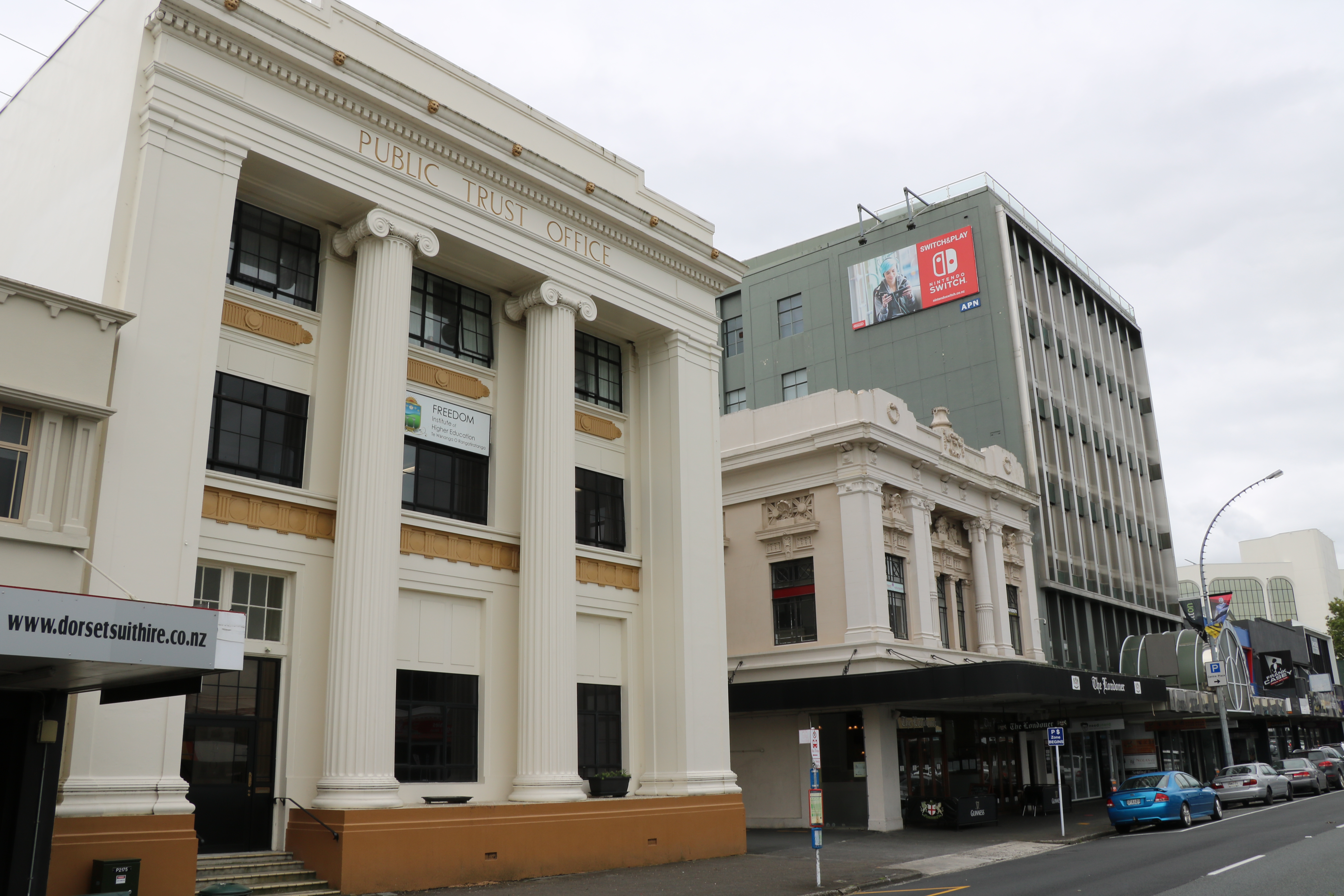
Kirikiriroa Pā was located in Hamilton's CBD between Bryce and London street. Photo: Horiana Henderson
The King warned his people saying, “Gunboats [are] coming. Ka mate koutou (you will die).”
Broadhurst’s speech on Rā Maumahara acknowledged the 4th Regiment’s part in the occupation of Kirikiriroa (Hamilton) and rejected the notion that her ancestors had ‘deserted’ their land.
What would you do if you had gunboats coming down to you? We did not desert our land!
“Gunboats came and found nobody there.”
Enlarge
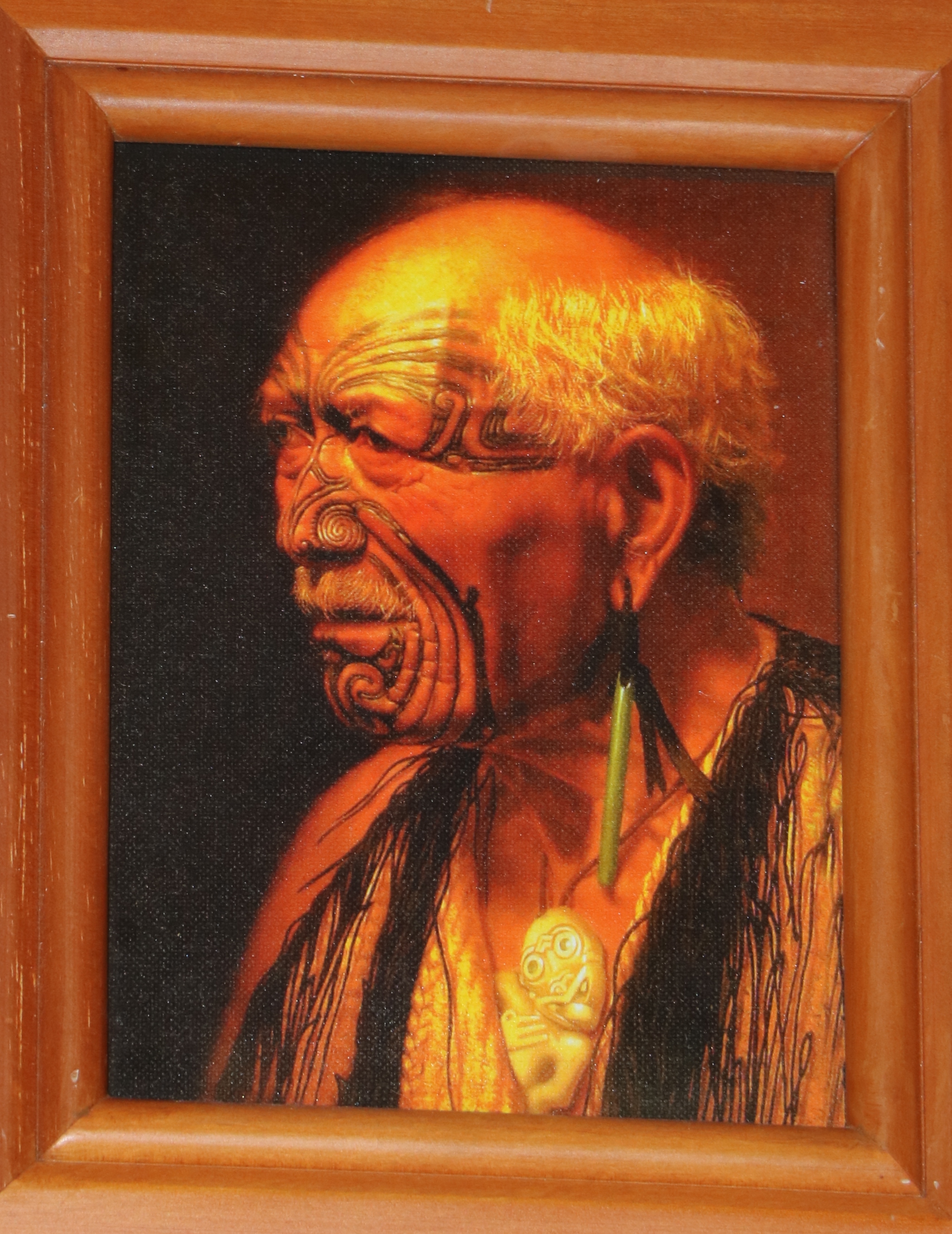
Broadhurst's tupuna Patara Te Tuhi accompanied King Tāwhiao to see Queen Victoria in 1884. Photo: Supplied
For years, Tāwhiao sort redress for grievances against his people and ultimately travelled to England in 1884 to speak with Queen Victoria regarding her agents’ actions and to solicit the return of Māori land. One of Tāwhiao’s companions was Kameta’s great grandfather and tupuna of Broadhurst, Patara Te Tuhi.
The delegation were denied an audience with the British Monarch and returned to their people.
Over a million acres of land was taken in retribution for the Kīngitanga’s resistance and Māori, including Ngāti Wairere, were exiled from their lands.
Hamilton City Council’s 2003 Māori Landmarks on Riverside Reserves-Nga Tapuwae o Hotumauea plan states that:
“Following the confiscation of Waikato land it was decided by the Government that settlement of this land should be done by men who would be able to defend it in case of future hostilities.”
Broadhurst experienced the after-effects of displacement, hardship and military occupation and acknowledges the Kīngitanga’s role in sustaining the people.
Our own land, you couldn't go back on it...My parents, my grandparents, we all had to live outside the boundary of confiscation land...it wasn't good
She spoke of Ngāti Wairere living outside the imposed boundary at Hukanui, Tauhei and Waiti. Initially the people lived in whare made of raupo reeds and earned an income by selling kauri gum for making glue.
Enlarge
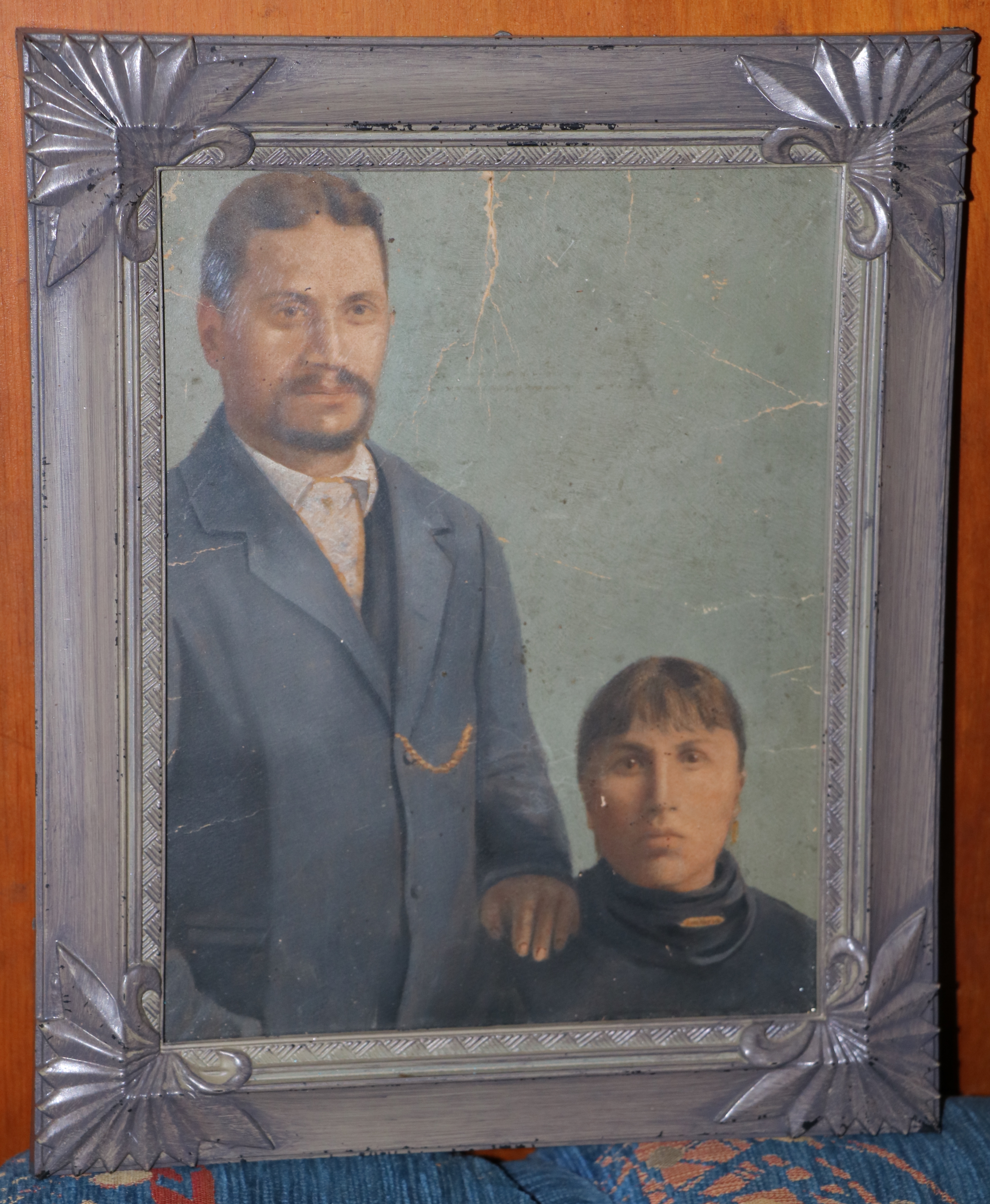
Broadhurst's grandparents Te Puke Waharoa and Kameta lived at the original Kirikiriroa Pā. Photo: Supplied
Tāwhiao returned from Te Nehenehenui (King Country) to see his Hukanui kin about a month after Rangiriri. From there Ngāti Wairere began construction of his whare: Tuturu-a-Papa.
“They all slept in there. They had to build everything by hand.”
“They had a whare kai. They had their own lifestyle.”
“They were very, very much like a family,” Broadhurst recounted.
She and her brother Hakopa Puke are the “last of the few” descendants of Te Puke Waharoa who have living memory of the people who lived at Kirikiriroa Pā.
Kameta was Te Puke Waharoa’s wife and she was the last survivor of the pā passing in 1947 at the age of 104.
According to new Hamilton City Council signage at the site, Kirikiriroa Pā was the “most significant” of a network of Ngāti Wairere pā stretching along the Waikato River from Ngāruawāhia to Horotiu (present-day Cambridge).
Enlarge
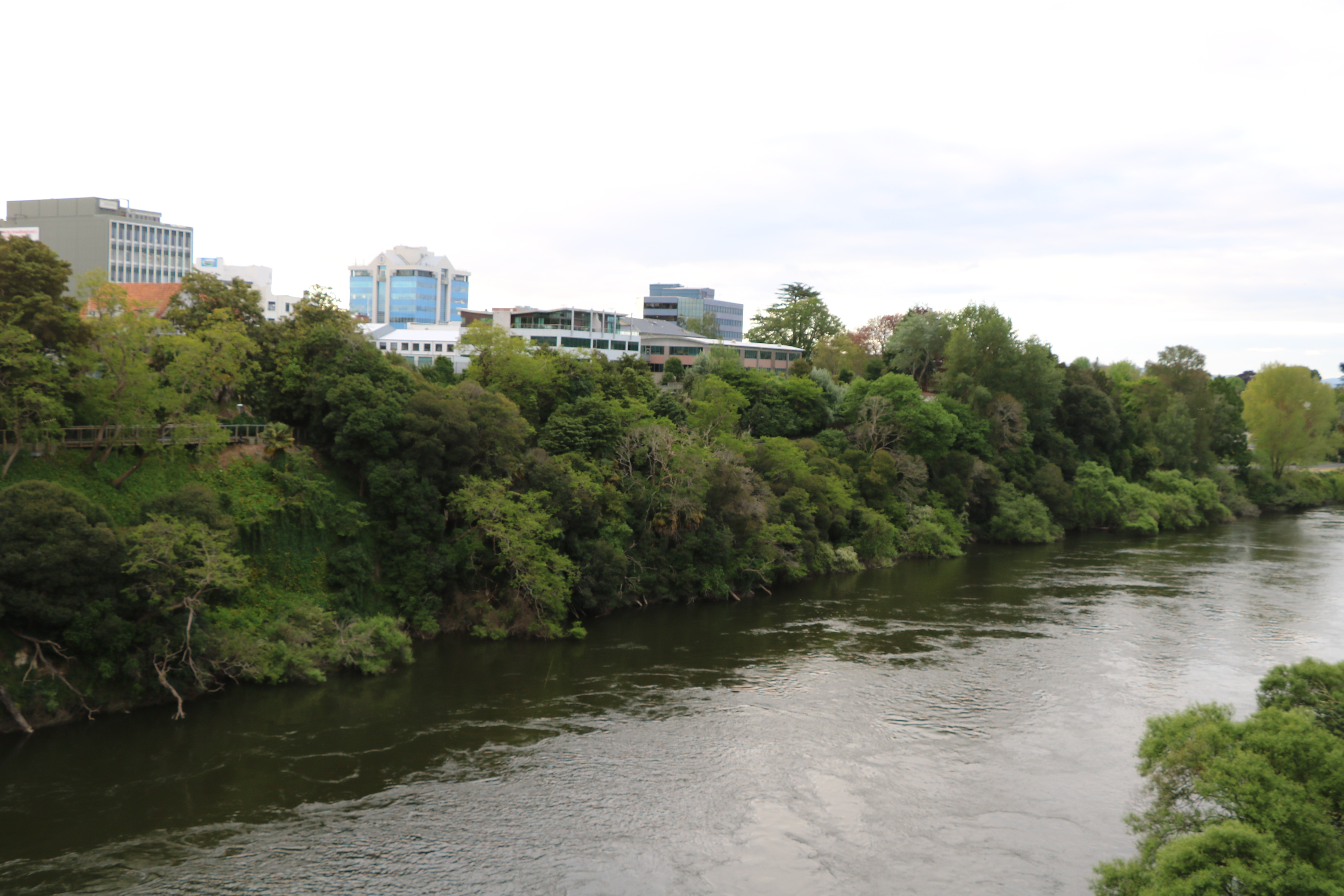
A view from Claudelands bridge of where Kirikiriroa Pā stood. Photo: Horiana Henderson
Broadhurst said that the pā’s significance was ignored following the 4th Regiment’s annexation but she maintains that Ngāti Wairere are still the “Ahi kaa”: holders of customary rights and responsibilities over Kirikiriroa.
She said that the Waikato Wars were not the design of Māori.
2017 was New Zealand’s first year officially acknowledging the wars fought at home of which the Waikato Wars were significant. The Ngāti Wairere kuia was able to remember her ancestors and Kirikiriroa history and said of participating in the commemoration service:
“I was only too happy to be there.”
Enlarge
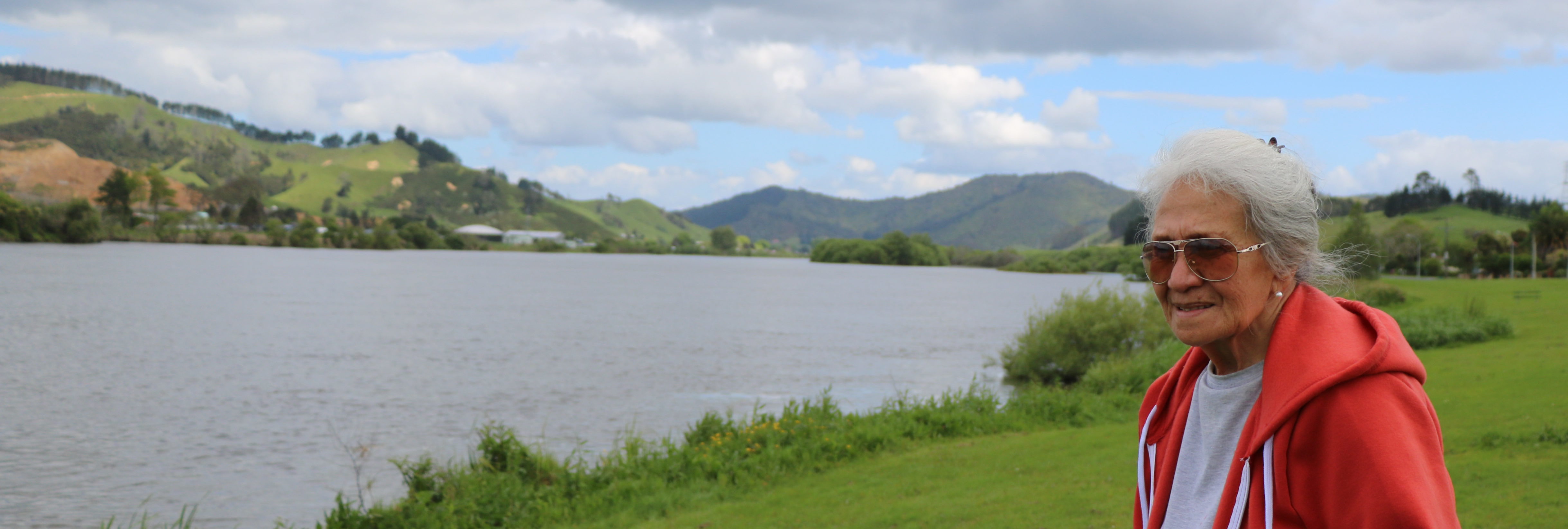
Ngāti Wairere kuia Hekeiterangi Broadhurst looks over the Waikato river. Photo: Horiana Henderson
Mayor unveils signs at significant Hamilton site
Enlarge
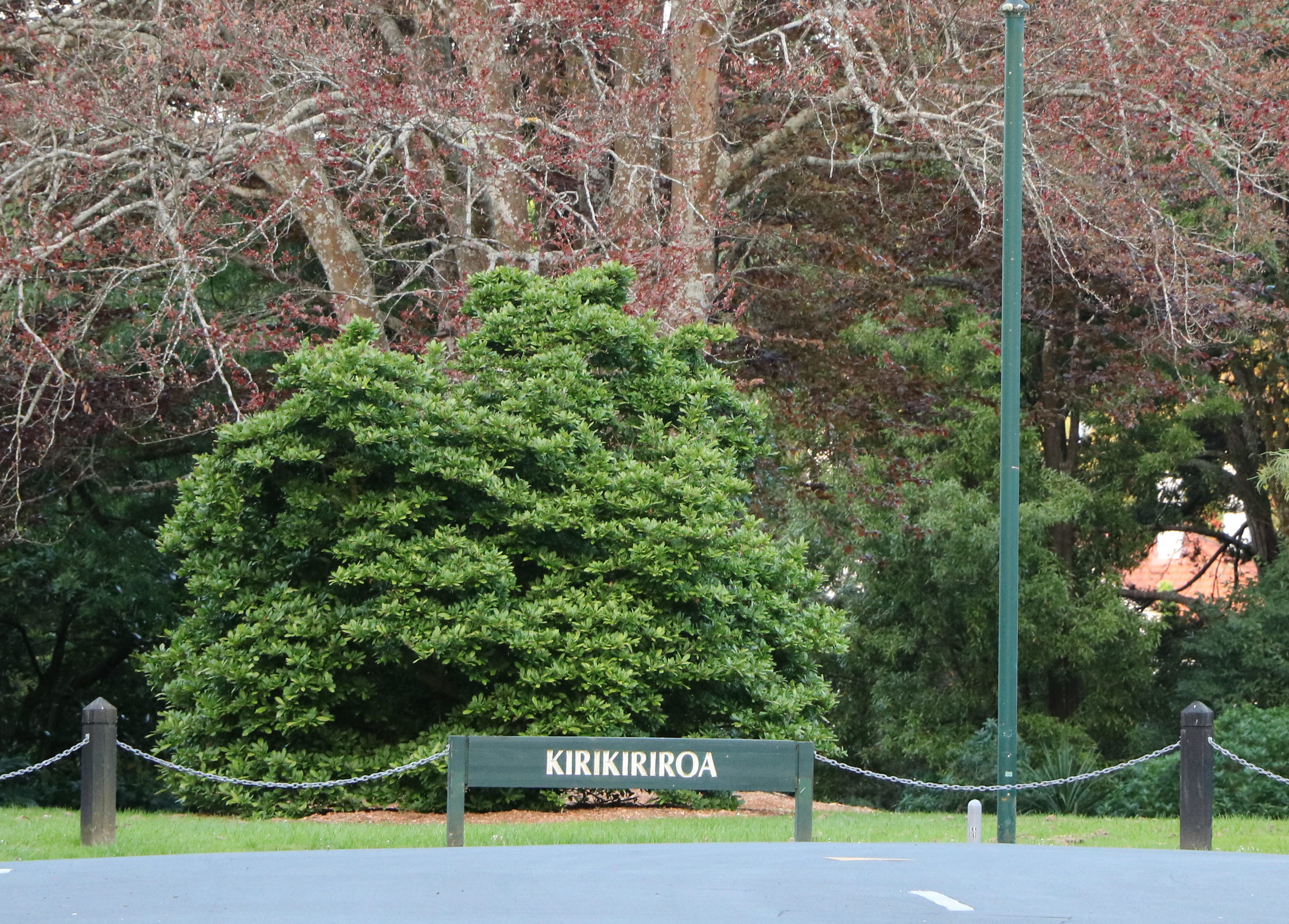
Kirikiriroa reserve sign on the river end of London Street, Hamilton CBD. Photo: Horiana Henderson
Hamilton Mayor Andrew King, in a little-publicised service, unveiled two new signs with an artistic upgrade at Kirikiriroa Pā on November 16.
Kirikiriroa Pā was the principal pā of the Ngāti Wairere people from 1690 and became a garrison for British troops after the Waikato War battle at Rangiriri in 1863. Following that first surveyor, and later Mayor of Hamilton, William Graham built his house on top of the sacred pā site. It was located along the Waikato river from Hamilton CBD’s Claudelands Bridge to London street and the reserve is at the river end of the latter.
Enlarge
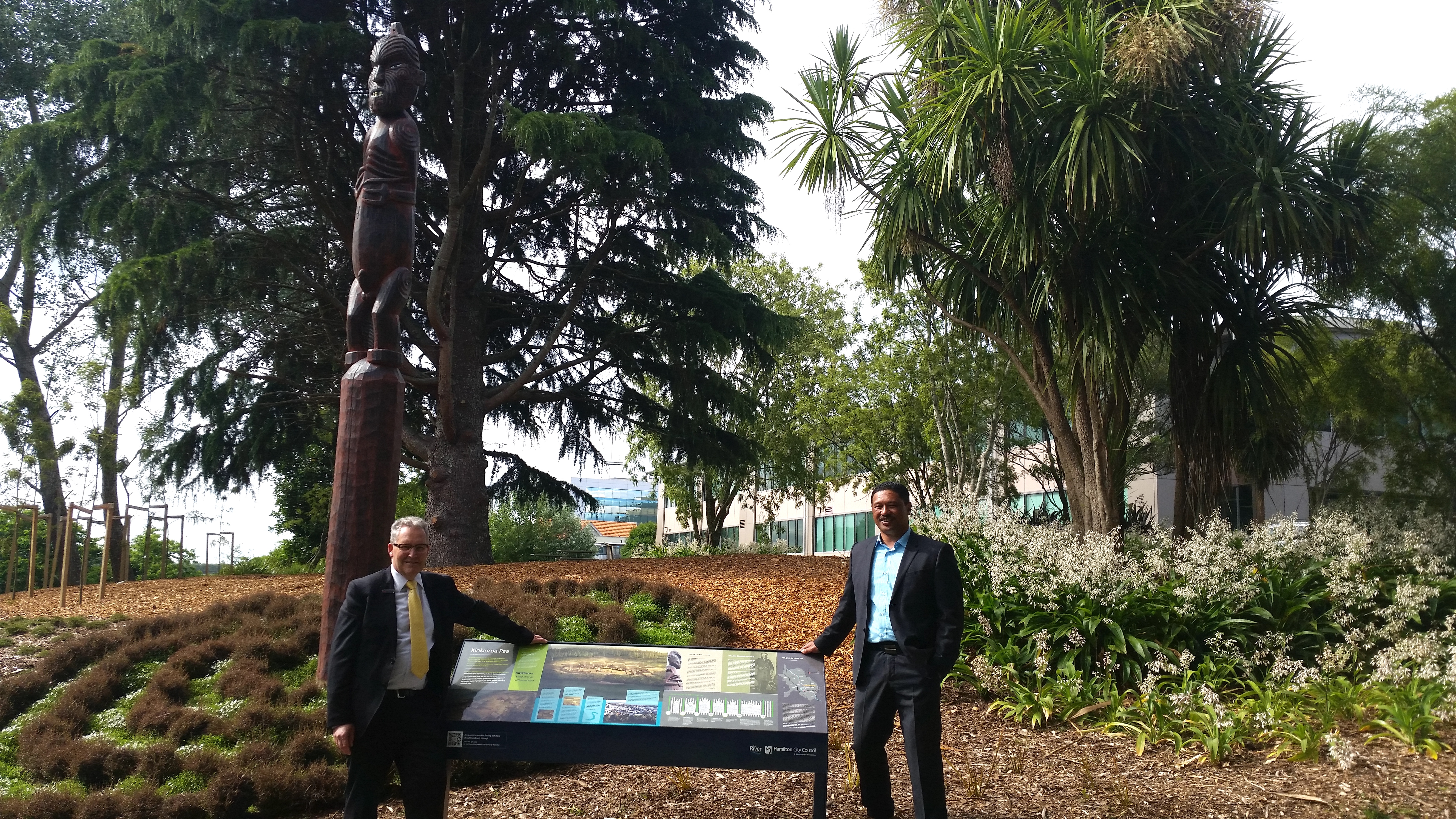
Hamilton Mayor Andrew King and HCC Amorangi Māori manager Muna Wharawhara stand beside one of the new Kirikiriroa Pā signs and Hoera Taonui Pou. Photo: Horiana Henderson
The city’s current Mayor acknowledged the occasion.
The Hamilton City Council is honoured to have contributed to the commemoration of Kirikiriroa Pā as a site of significance and importance to our whenua
The pā’s 2004 sign had deteriorated and as part of the Hamilton City Council’s River Plan upgrades were commissioned.
The two new information panels include artistic impressions of what Kirikiriroa Pā might have looked like during early Māori occupation when it was permanent home to several hundred Ngāti Wairere residents. It was also a fortified refuge for those of the hapū who lived on and cultivated the surrounding area.
The signs state that it is “one of the most important pā sites in the Hamilton area” and translates “Kirikiriroa” as meaning “long strip of cultivated land,” representing the early tenants’ numerous gardens to be found along both sides of the Waikato River from Ngāruawāhia to Horotiu (present-day Cambridge).
Enlarge
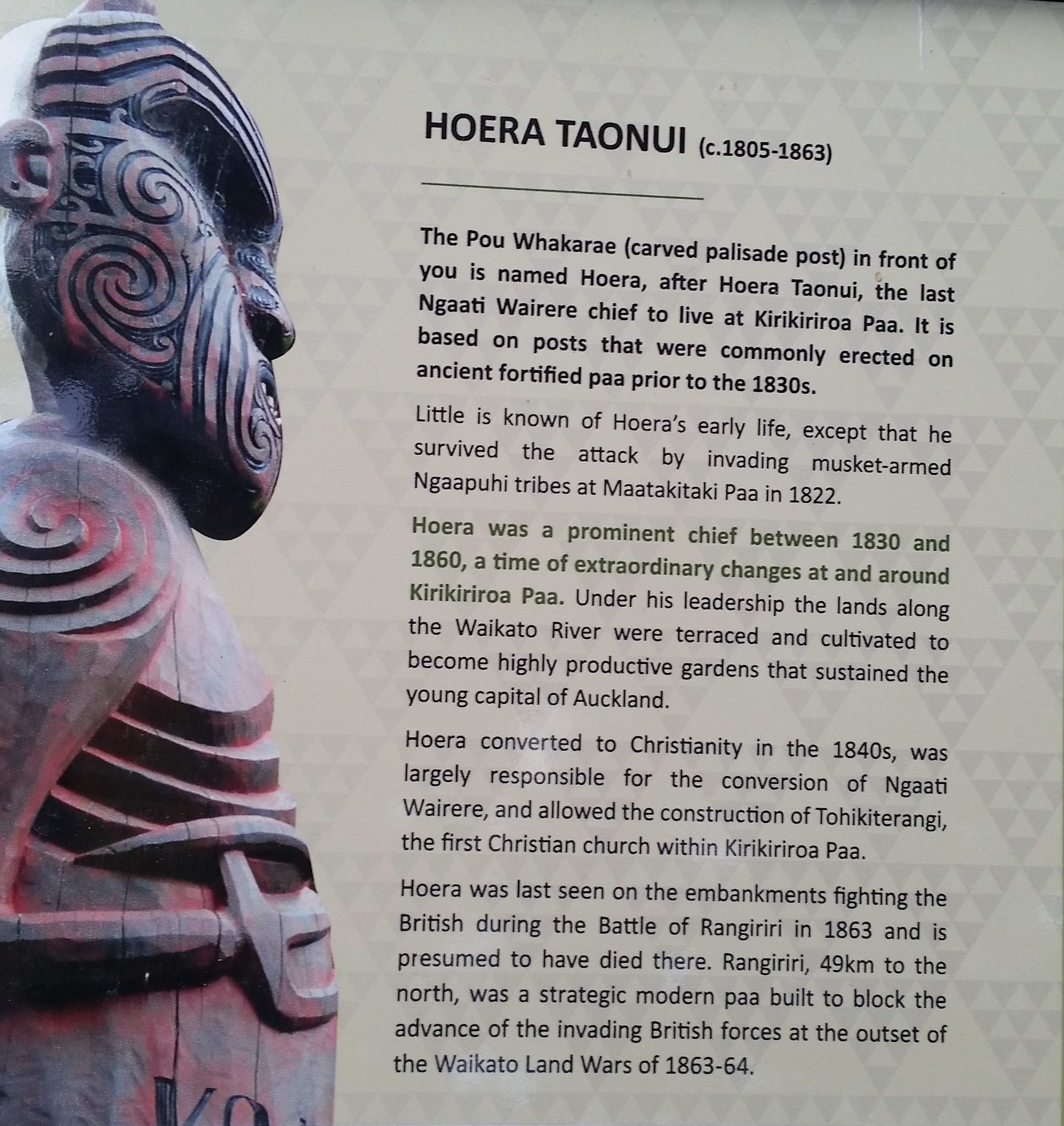
Pou Whakarae of Hoera Taonui; last Ngāti Wairere chief of Kirikiriroa Pā. He is presumed to have died at the Battle of Rangiriri in 1863. Photo: Horiana Henderson
Pou whakarae (carved palisade posts) were prominent features of former pā and the one that stands at Kirikiriroa today represents its last chief, Hoera Taonui (1805-1863).
Last month New Zealand observed the first Rā Maumahara (Commemoration Day of the New Zealand Wars), which included the Waikato Wars: Battle of Rangiriri in 1863 – the events which were the catalyst for Ngāti Wairere vacating the pā site.
Under the direction of the second Māori King, Tāwhiao, Ngāti Wairere chief Hoera Taonui led his people to Rangiriri in opposition to the confiscation of Māori lands. He is presumed to have died there.
The people left the pā for Hukanui (Gordonton) following the defeat of the Kīngitanga host and before European occupation in 1864.
The boards’ histories came from local hapū and the designs were a collaboration between Dallow Boss and Stantiall Studios.
Enlarge
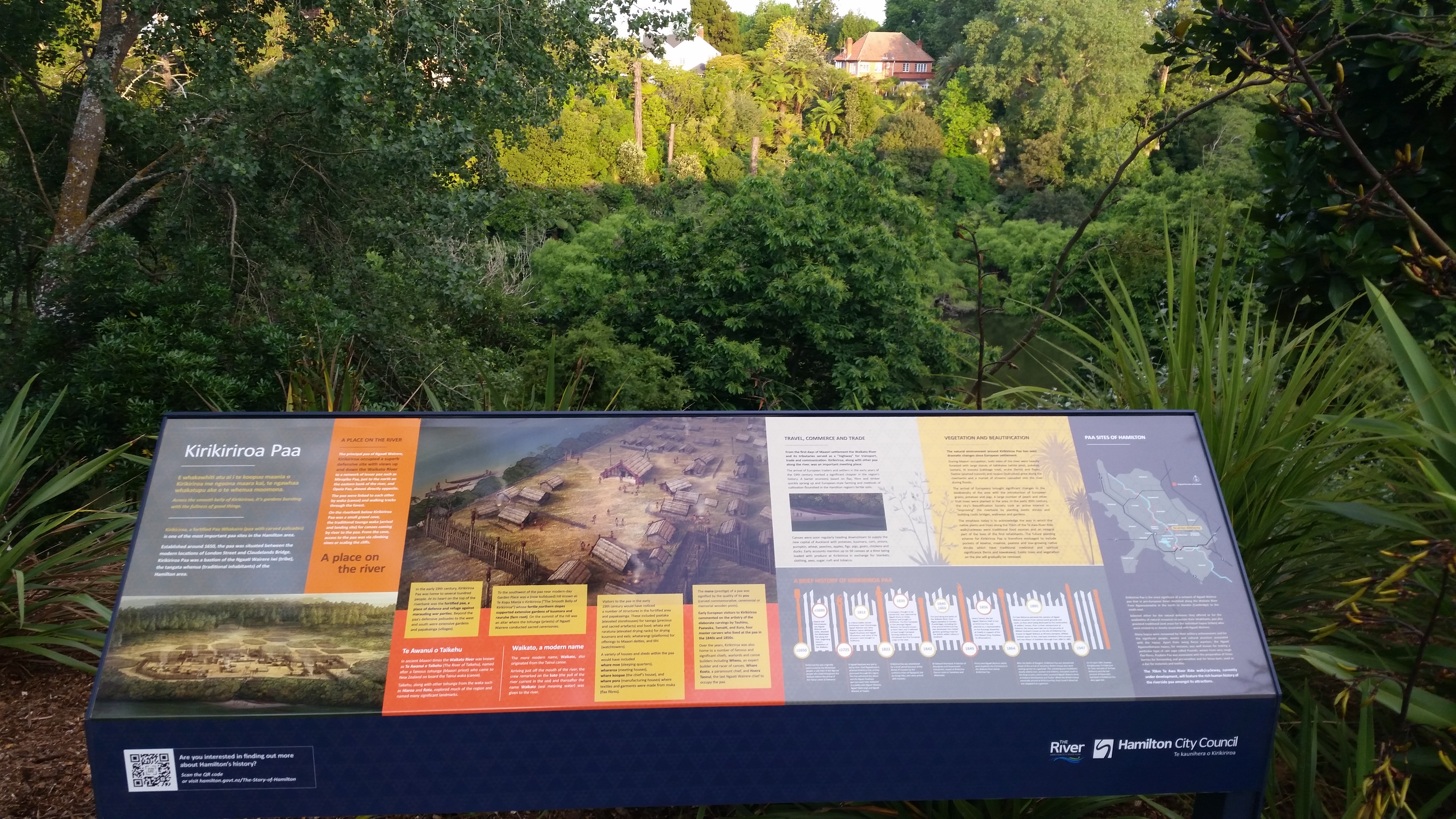
A new information panel overlooks the Waikato river from where Kirikiriroa Pā once stood. Photo: Horiana Henderson
Hamilton City Council’s Amorangi Māori (Strategic Māori relationships manager) Muna Wharawhara acknowledged Nga Mana Toopu o Kirikiriroa (NaMTOK) who were hapū resource and cultural consultants to the council on earlier projects regarding the pā and he spoke of the new signage.
“We haven’t changed much of the stories that Nga Mana Toopu o Kirikiriroa told.”
“Those are still the same.”
“The old signs became a bit old and dilapidated and they needed renewal.”
“So, we thought we’d take the opportunity to actually upgrade them as well,” he said.
Wharawhara said that council consulted local hapū, including Ngāti Wairere, throughout the development of the signs through Te Ha o te Whenua o Kirikiriroa. Kaumātua and kuia of the region belong to the group and were present on the day.
Te Puke Waharoa (c.1834-1895) and Kameta Rangikauwau Te Puke (nee Te Tuhi, c.1843-1947) both lived at Kirikiriroa Pā and their mokopuna, kaumātua Hakopa Puke, was a part of the proceedings. His elder sister Hekeiterangi Broadhurst, a usual mana whenua representative, who offered the karanga at the Kiwis versus Tonga Rugby League match five days prior, however was not included in the consultation process.
Enlarge
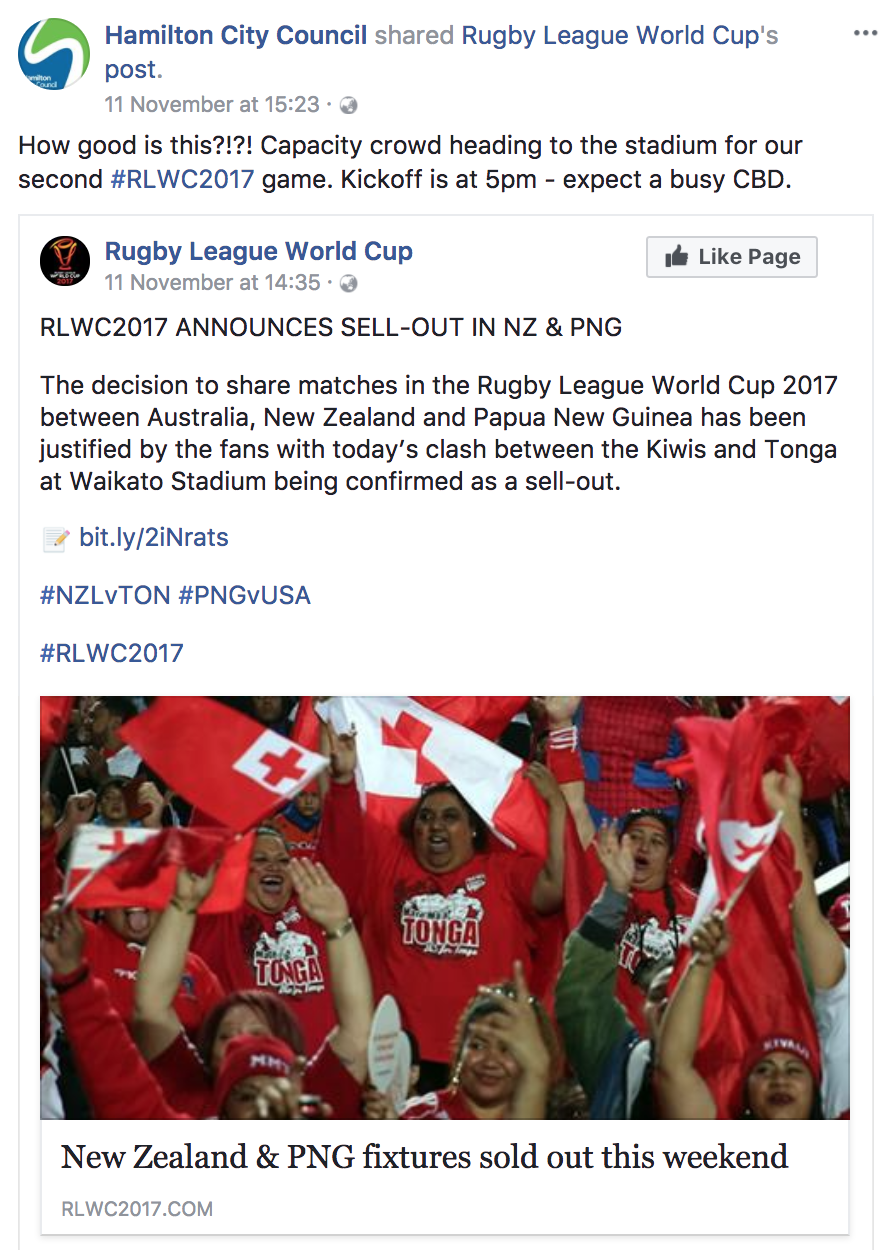
HCC's facebook post of the Kiwis versus Tonga Rugby League match that Ngāti Wairere kuia Hekeiterangi Broadhurst was asked to offer the karanga for five-days prior.
Broadhurst’s nephew Ngāti Wairere historian, Wiremu Puke, took to facebook with complaints asking why council had not notified NaMTOK, of which he and his aunt are a part, when he had met with Wharawhara the Māori relationship manager the day before.
An invitation was then extended to him via facebook and he responded saying, “You leave us as an after thought Muna!”
He said that his father Hare Puke (1925-2008) had “provided the text” regarding Kirikiriroa Pā and that council have legal obligations to Ngāti Wairere as mana whenua (holders of customary rights of the area). Puke referred to court proceedings wherein council lawyers acknowledged the hapū’s position.
Puke has said that proper protocol would have seen hui held at the marae about the event and notification “well ahead of time.”
Enlarge
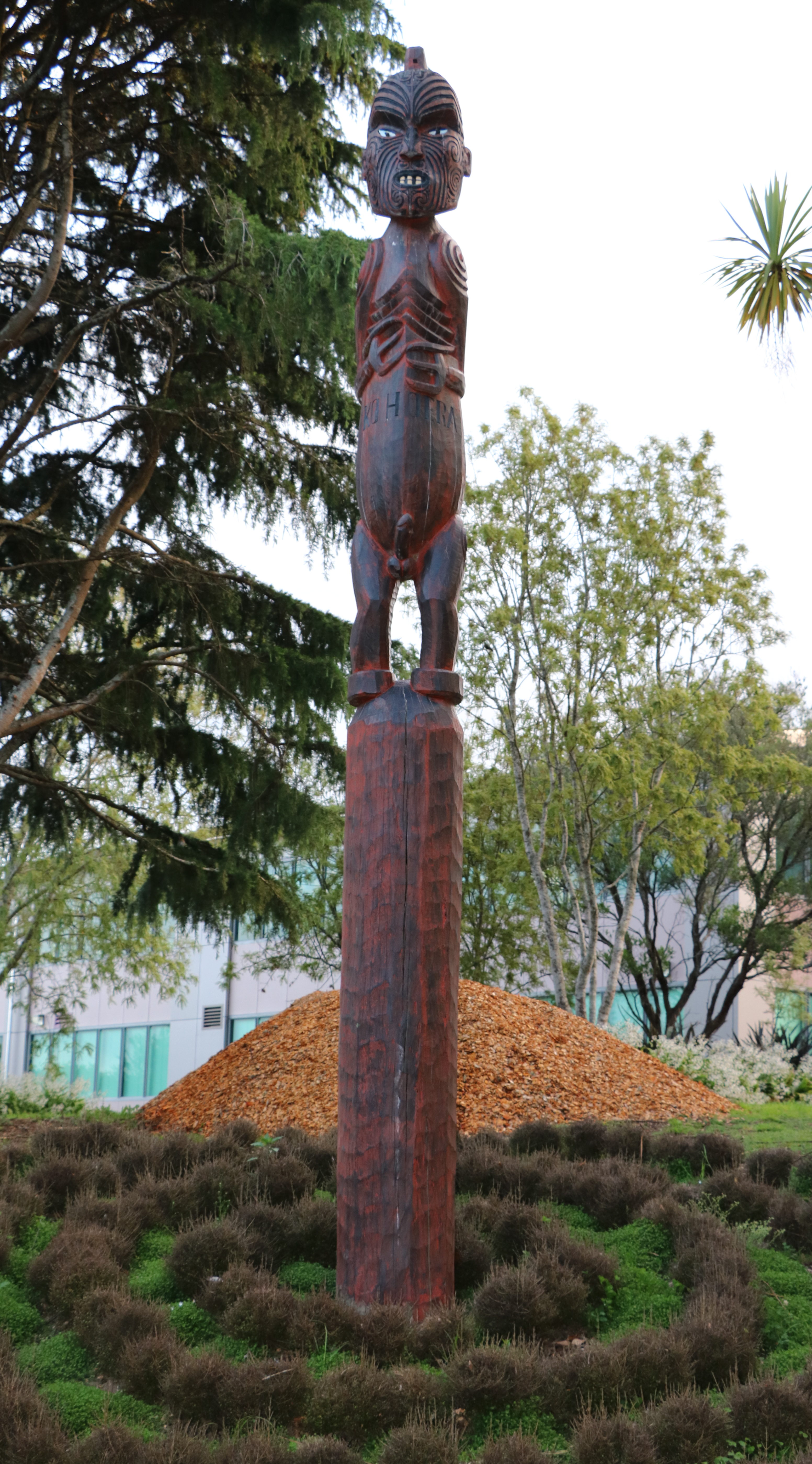
Wiremu Puke is listed as the artist responsible for Hamilton cultural installations from the Hoera Taonui Pou at Kirikiriroa Pā to Whatanoa Gateway at Waikato Stadium. Photo: Horiana Henderson
The Mayor said, “I understand that Wiremu was invited today but it was very late, I understand that was as late as last night, which could have made it very difficult for him to be here this morning.”
King also said that consultation was carried out with Te Ha o te Whenua o Kirikiriroa but that “the other group [NaMTOK] that Wiremu is with were not consulted.”
Wharawhara’s response was, “we’re quite clear that NaMTOK have interests as an interested party but in terms of our discussions at a mana whenua level then that continues to be the thought. There is a difference of understanding of the ruling between NaMTOK and council.”
On heritage matters applicants are directed to NaMTOK as an interested party.
“That part of the ruling we honour and acknowledge,” he said.
“From a council point-of-view we believe that we went through the proper processes in terms of consulting with Ngāti Wairere kaumātua.”
The Amorangi Māori manager said that direction regarding the development of the signs, the timing of the occasion and responsibility for informing hapū was led by kaumātua of Te Ha o te Whenua o Kirikiriroa of which Ngāti Wairere kaumātua Hakopa Puke is a member.
Enlarge
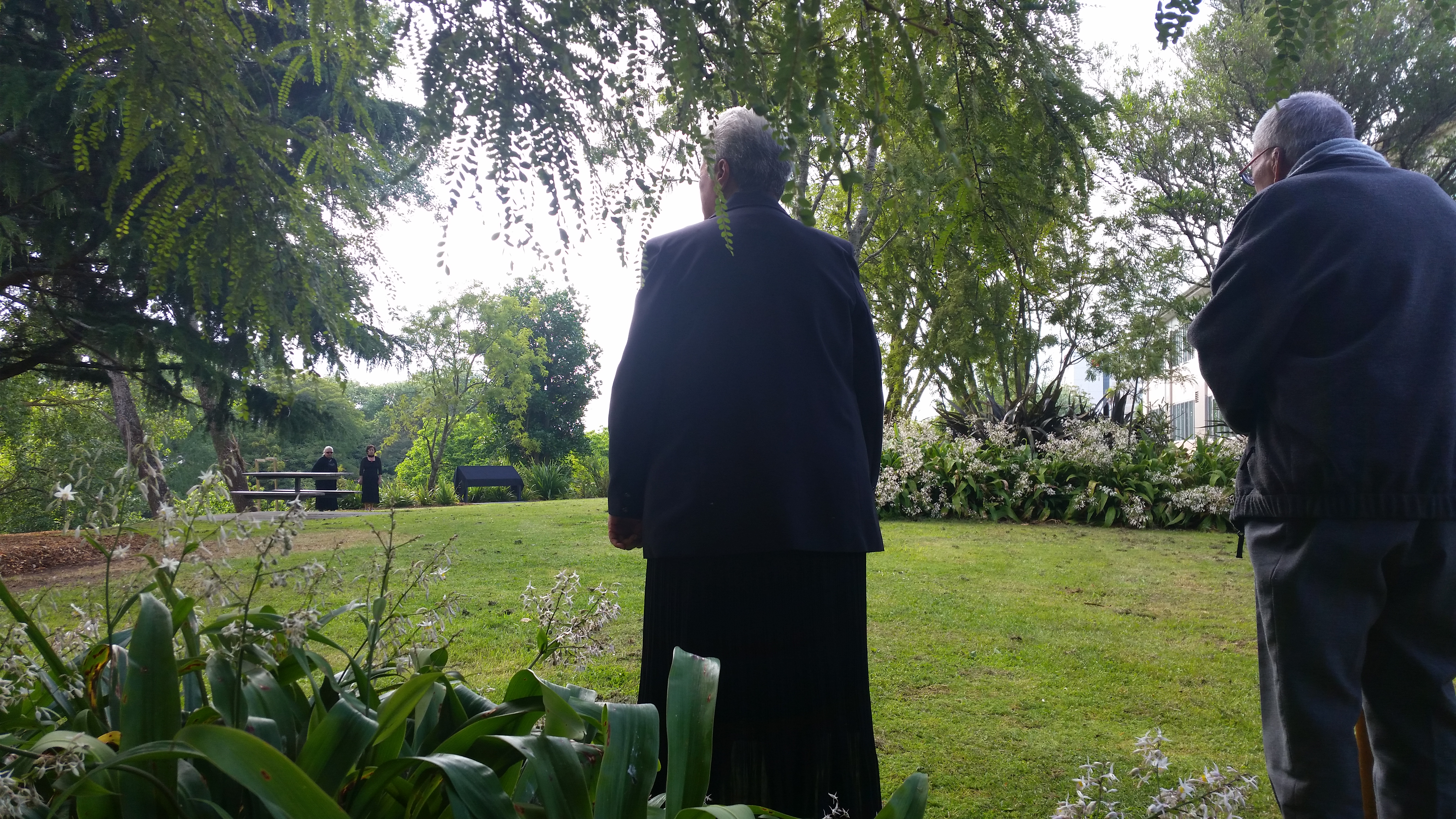
Kaumātua and kuia led the proceedings at the Kirikiriroa Pā ceremony. Ngāti Wairere kaumātua Hakopa Puke is on the right. Photo: Horiana Henderson
The ceremony was opened by Ngāti Hauā kaumātua Sonny Karena, and kuia summoned the group of about 30 attendees forward with karanga.
Karakia were offered, waiata were sung, and then black coverings were removed from the panels by the Mayor and Karena.
Enlarge
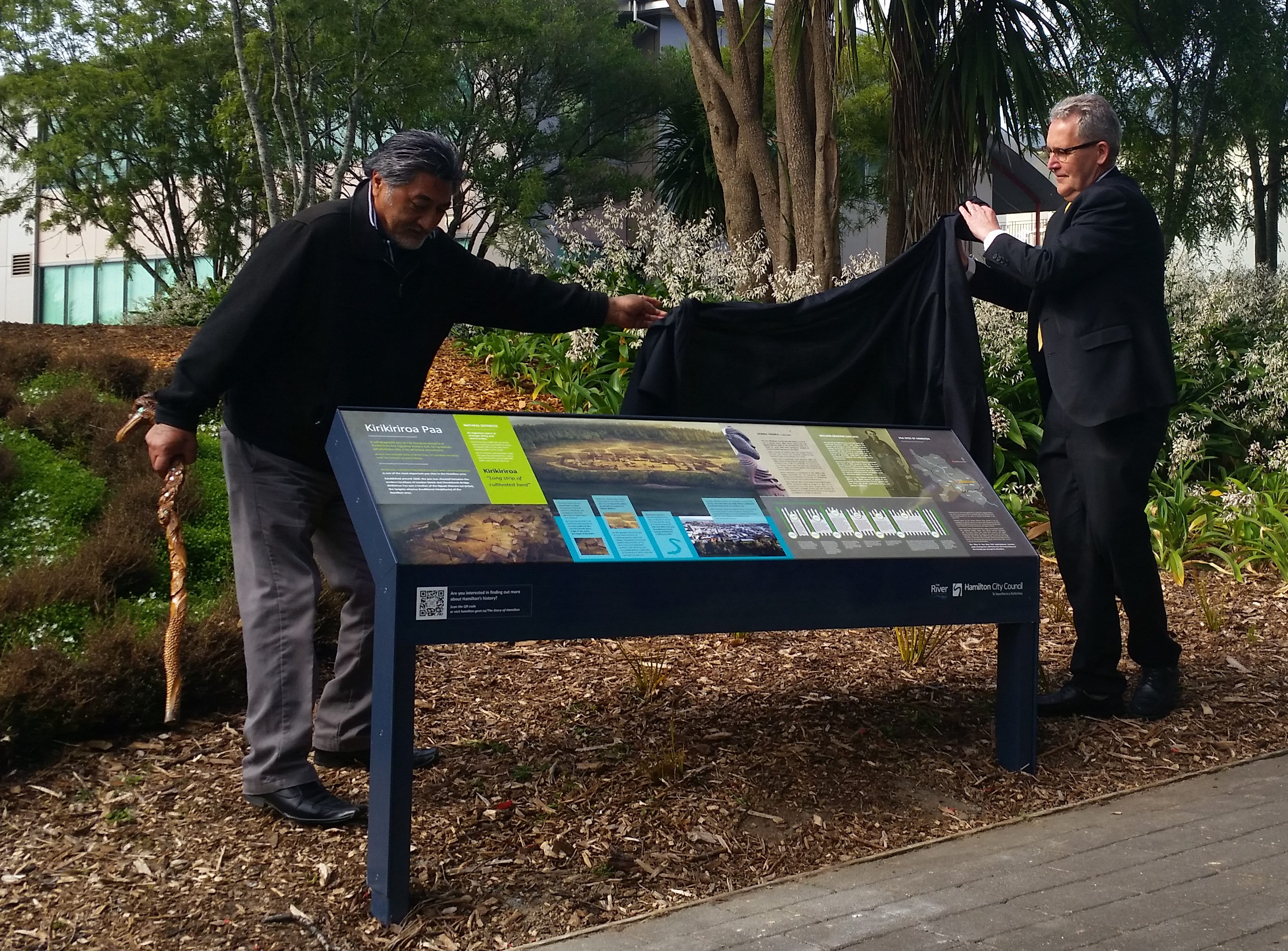
Ngāti Hauā kaumātua Sonny Karena and Mayor Andrew King unveil one of the new Kirikiriroa Pā signs. Photo: Horiana Henderson
Following the unveilings King was invited to speak.
He acknowledged kaumātua; members of the Hamilton City Council which included councillors Rob Pascoe, Siggi Henry and James Casson; and members of the public in attendance.
The Mayor also recognised Tainui as tangata whenua of Kirikiriroa.
“I particularly acknowledge your special place in our history and the inclusion of you in our decision-making going forward for this city, Kirikiriroa.
“I know that this is an ongoing process and we’re not finished yet,” King said.
The history told and revealed through the new interpretational panels is to be celebrated, shared and honoured as an important part of Hamilton’s history
“Kirikiriroa is a traditional name for this area we know today as Hamilton City. We sincerely thank the hapū for sharing their history with Hamilton City, its residents, and the visitors to our city,” the Mayor said.
Concluding remarks were offered by Wharawhara and acknowledged the source of the information embodied within the panels.
“I think we are quite privileged and quite lucky that they [hapū] were prepared to share those stories with us,” he said.
Wharawhara said, “Enjoy the stories. Enjoy the beautiful pictures.”
Enlarge
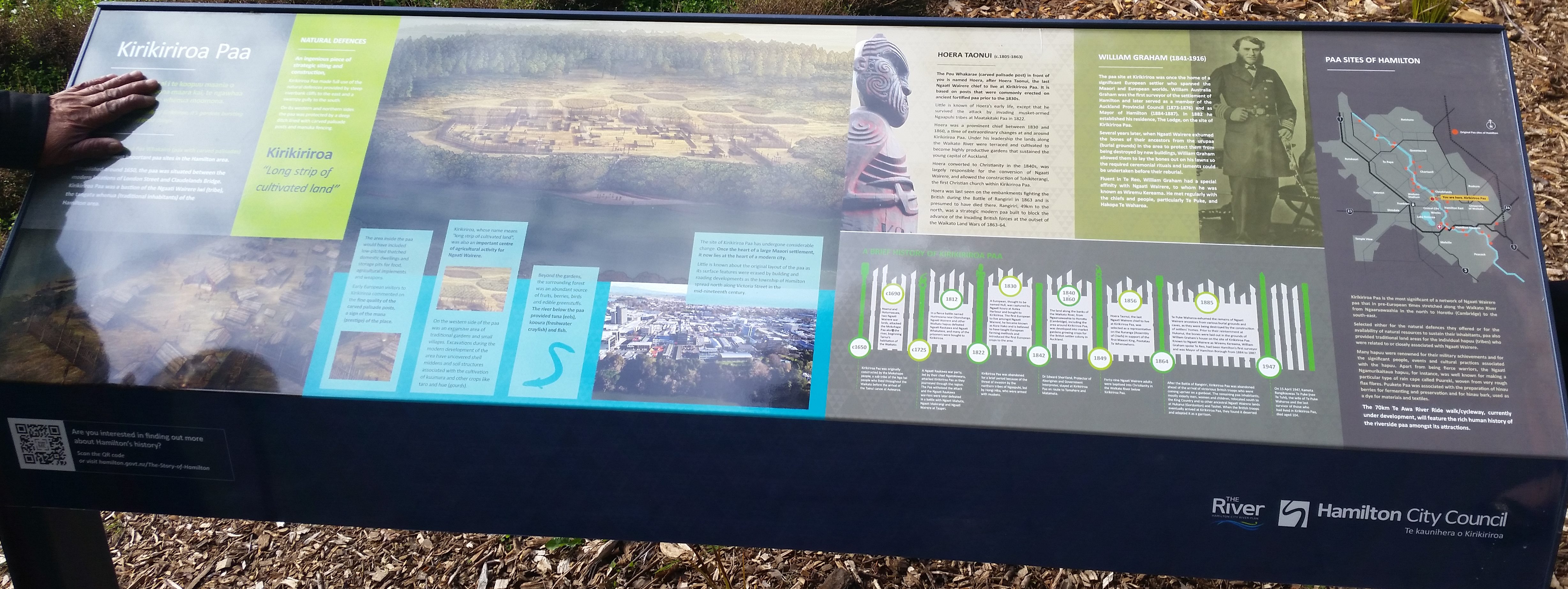
A kuia lays her hand on the new Kirikiriroa Pā sign. Photo: Horiana Henderson
The ceremony was followed with refreshments at Columbus Coffee on the corner of London and Victoria Streets.
See also Hamilton Heritage: A New View


